

After over 20 years of controversy and misinformation surrounding hormone replacement therapy (HRT), the U.S. Food and Drug Administration (FDA) is finally revising the broad “black box” warnings previously applied to HRT products used for menopause and perimenopause.
What is a “black box” warning? They appear inside a black border on the drug’s label to alert healthcare providers and patients about significant risks associated with the medication.
The FDA’s recent decision to remove black box warnings from women’s hormone therapy has sparked new conversations. After years of mixed messages, many people will finally see more precise, more updated language around hormone replacement options for addressing symptoms of menopause.
So, if you felt uncertain or discouraged in the past, the change creates room for open, grounded conversations with your healthcare provider. It doesn’t remove the need for thoughtful medical guidance, but it encourages a more balanced understanding of therapies that have helped thousands of women to support comfort and well-being during this stage of life.
The FDA HRT Warning That Sparked Years of Uncertainty
In the early 2000s, the Women’s Health Initiative (WHI) study reported possible links between some hormone therapy products and several health concerns. Consequently, that report led to an FDA HRT warning that shaped public perception for more than two decades. Many prescribers shifted their prescribing habits, and a large portion of the population hesitated to use hormone therapy.

What was less visible in the public discussion were two important details: the average age of participants in the WHI study, which was 63 years old, and the products evaluated then differ from many new options available today.
The age factor is significant because many people experience menopause-related changes a lot sooner than 63, and timing is of great importance when it comes to HRT. New research and updated product information have added context that the old study didn’t capture.
Dispelling the Misinformation Around the Hormone Replacement
How did change finally happen? The FDA reviewed extensive scientific literature, held an expert panel discussion, and opened a period for public comments. This allowed researchers, clinicians, and the wider public to provide input on how hormone therapy is understood today.
“Menopause is diagnosed after 12 months without a menstrual period, vaginal bleeding or spotting. Menopause can happen in the 40s or 50s. But the average age is 51 in the United States.”
Source: Mayo Clinic
Several randomized studies suggest women who started their HRT within 10 years of the onset of menopause (or under 60) have a reduction of all-cause mortality.
The studies highlighted the potential of:
- Reduced risk of cardiovascular diseases by up to 50%
- Reduced risk of Alzheimer’s disease by 35%
- Reduced risk of bone fractures between 50% and 60%
While the FDA noted that starting HRT may be considered by women within 10 years of menopause or under 60, the decision remains between her and her prescriber.
Women’s Hormone Therapy Finally Moving Forward
This change by the FDA represents a meaningful moment for many, especially for those who have carried years of uncertainty around hormone therapy. Individuals and practitioners who once felt hesitant or uneasy may find it easier to discuss options.
“Tragically, tens of millions of women have been denied the life-changing and long-term health benefits of hormone replacement therapy because of a medical dogma rooted in a distortion of risk… For too long, issues of women’s health have been underrecognized. Women and their physicians should make decisions based on data, not fear.”
Moving forward, the new labeling will remove certain references related to cardiovascular concerns, breast cancer, and probable dementia.
Watch: Learn more about why the FDA is initiating label changes for hormone replacement therapy products for menopausal women.
Menopause: Understanding a Significant Life Transition
What is Menopause? Menopause is a natural stage that marks a shift in women’s hormone patterns, particularly estrogen and progesterone. As these levels change, many notice a range of physical and emotional changes that may influence daily comfort and overall well-being.
Common experiences may include:
- Hot Flashes: Sudden warmth or flushing that may interrupt activities.
- Night Sweats: Sweating during sleep that can disturb rest.
- Mood Changes: Moments of irritability, anxiety, or low mood
- Vaginal Dryness: Reduced lubrication that may cause discomfort.
- Sleep Disturbances: Trouble falling asleep or staying asleep.
- Bone Density Loss: Changes often associated with low estrogen levels.
What is Perimenopause? Perimenopause is the transitional period before menopause. During perimenopause, levels of estrogen start to decrease. You may begin having menopause-like symptoms, such as hot flashes or irregular periods. Perimenopause can last for years.
These symptoms may vary widely. Some women may explore different options with their healthcare providers to see what may support comfort during this period.
Addressing Menopausal Symptoms with Central Ohio Compounding Pharmacy
Since menopause and perimenopause are experienced differently, talks about managing it should be diverse too.
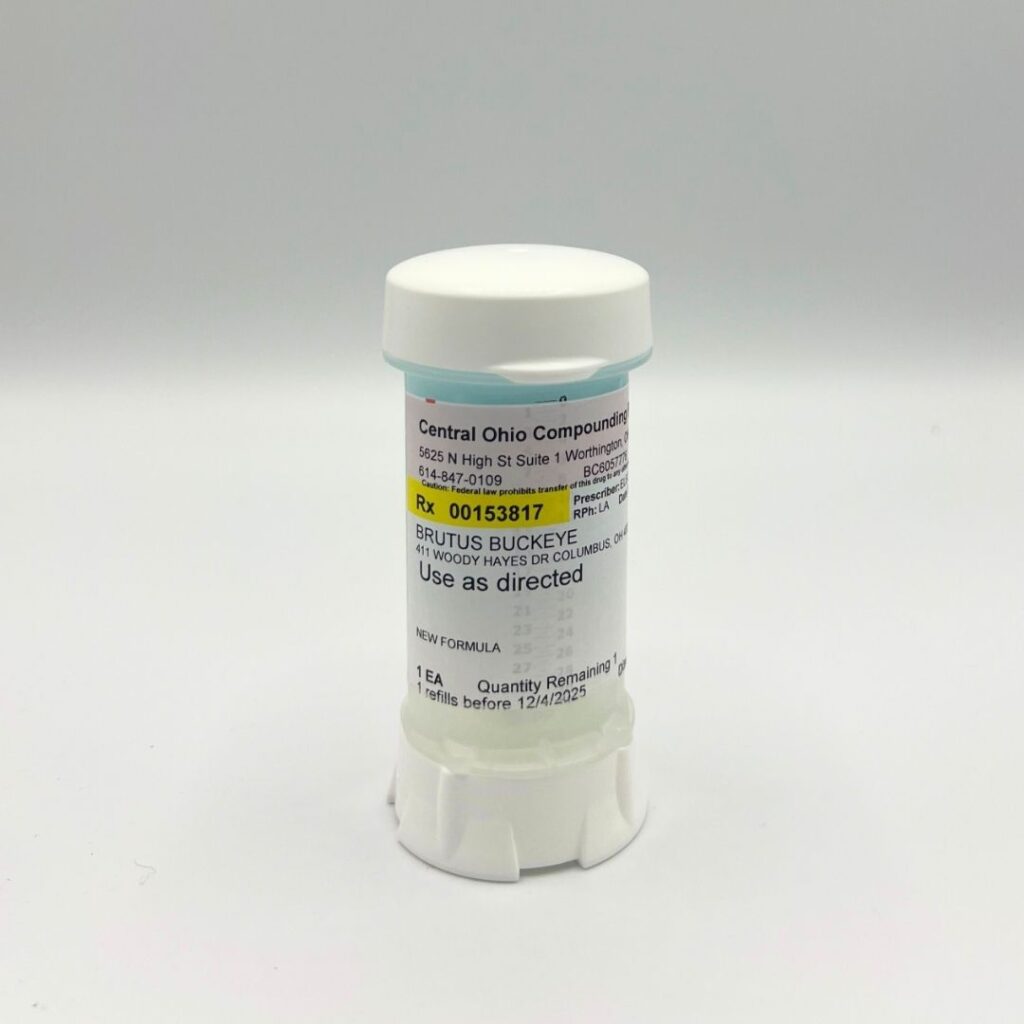
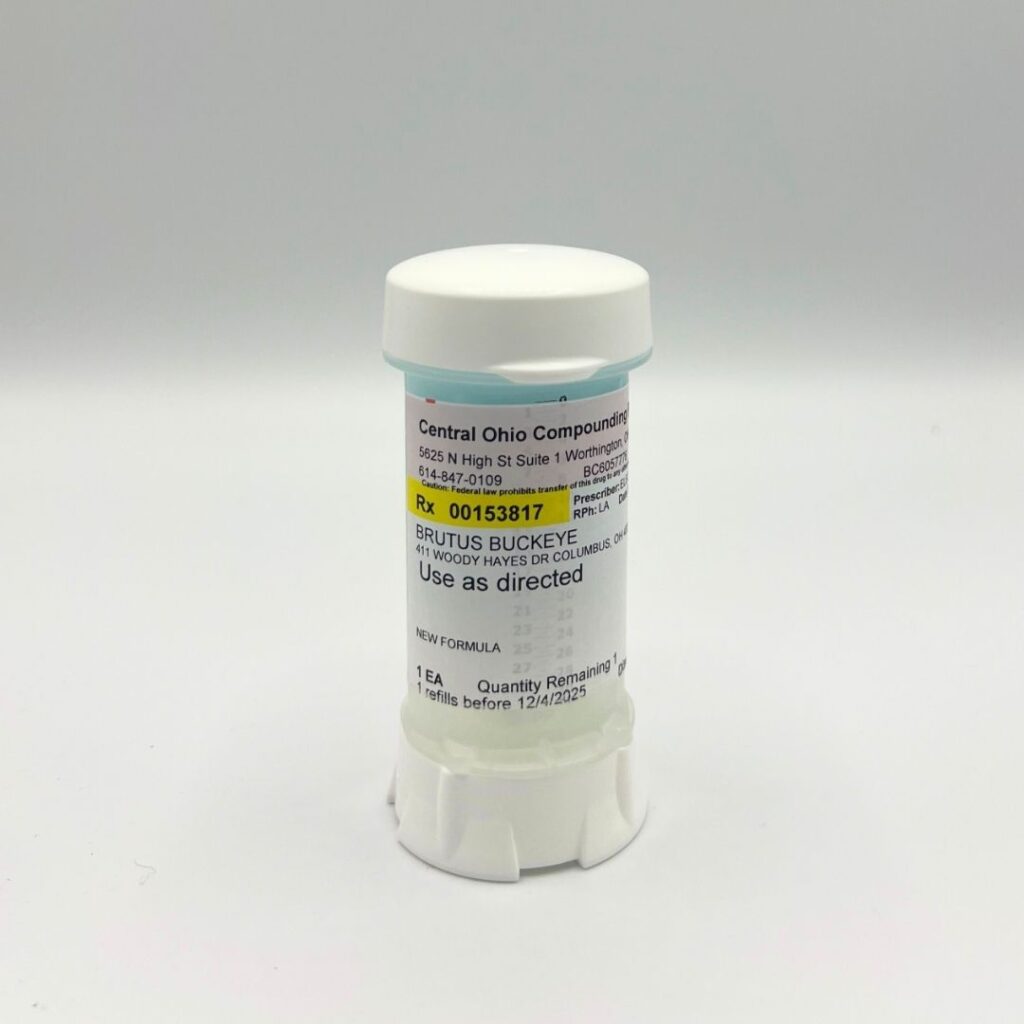
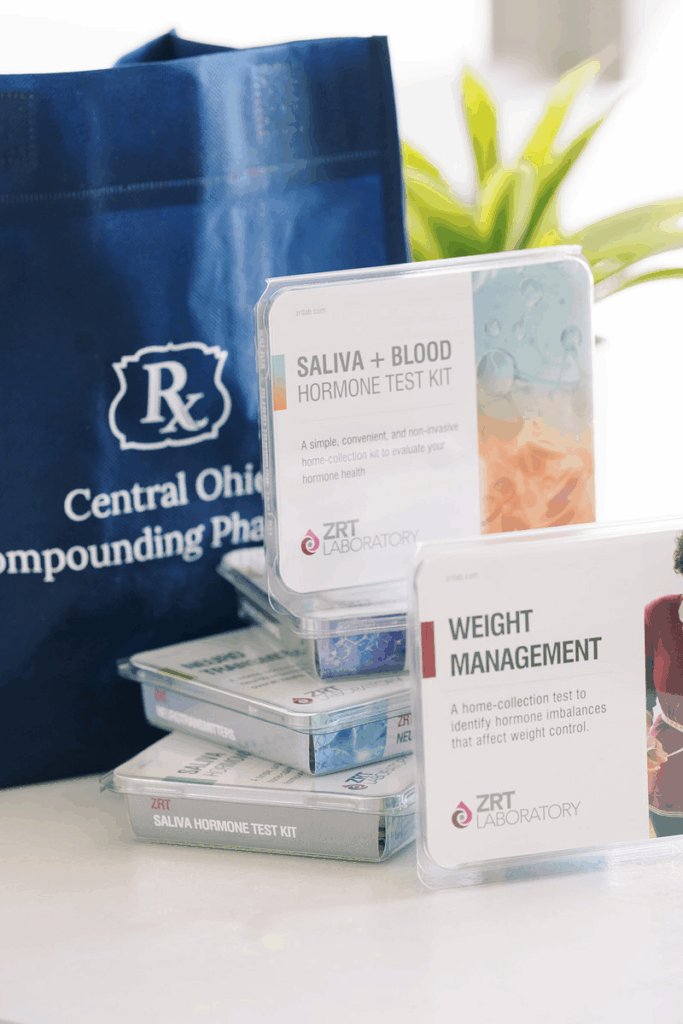
At Central Ohio Compounding Pharmacy, we prepare Bioidentical Hormone Replacement Therapy (BHRT) medications that match the chemical structure of hormones naturally produced in the body. Hormone testing is completed by patients (at-home saliva testing kits are available for purchase), where pharmacists and prescribers are able to assess deficiencies that need to be addressed.
Here are the most common forms of bioidentical hormone replacement therapy (BHRT) for managing menopause, along with what each may do:
Estrogen (Estradiol and Estriol)
- Purpose: May help alleviate symptoms such as hot flashes, night sweats, and vaginal dryness.
- Forms: Creams, gels, capsules, patches, suppositories.
- Note: Estradiol is a stronger form often used systemically, while estriol is milder and often used in vaginal formulations for local support.
Progesterone
- Purpose: May help balance estrogen, support mood, promote better sleep, and maintain uterine health.
- Forms: Creams, oral capsules, sublingual tablets.
- Note: Often prescribed alongside estrogen to reduce the risks associated with unopposed estrogen therapy.
Testosterone
- Purpose: May help improve energy, libido, muscle tone, and overall well-being, especially when androgen levels decline.
- Forms: Creams, gels, sublingual tablets, patches.
- Note: Often used in combination with estrogen/progesterone to round out hormone support.
DHEA (Dehydroepiandrosterone)
- Purpose: A precursor hormone that may support overall hormonal balance and energy.
- Forms: Creams, capsules, suppositories.
- Note: Sometimes used to address symptoms of adrenal fatigue or mild hormone deficiencies.

BHRT Dosage Forms Include:
- Topical Creams & Gels: Applied to the skin for steady absorption.
- Capsules: Oral form, convenient and familiar.
- Sublingual Drops or Troches: Absorbed under the tongue for quick effect.
- Vaginal Creams: Deliver hormones directly into vagina for targeted approach.
- Suppositories (Vaginal/Rectal): Localized hormone delivery.
Central Ohio Compounding Pharmacy: Supporting Women’s Health
At Central Ohio Compounding Pharmacy, we’re committed to supporting the conversations women have with their healthcare providers — especially as understanding around menopause continues to evolve.
We are Ohio’s trusted pharmacy for Compounded Bioidentical Hormone Replacement Therapy that may provide flexibility in strength, delivery form, and excipient selection. This allows prescribers to order customized medications based on each woman’s specific symptoms and hormone levels.
Patients: How Do I Get Started?
For women, our team provides answers to questions you may have, and also work hand-in-hand with prescribers to recommend specific forms or combinations appropriate for each patient. We will need to assess your current hormone levels as well as a number of other factors to get the full-picture.

Schedule an in-person or virtual consultation with our hormone expert today.

Lucy Andrews, PharmD
Pharmacist & Hormone Consultant
Lucy earned her Doctor of Pharmacy from The Ohio State University College of Pharmacy and has specialized in compounding since 2019. She focuses on hormone replacement therapy, women’s health, and nutritional supplements. In 2023, she earned her certification in Hormone Replacement Therapy from The Professional Compounding Centers of America and actively attends conferences to expand her expertise.
Already have a BHRT prescription?
Submit your refill request here.
Prescribers: How Do I Get Started?

For prescribers, our RX Order Forms are designed to help simplify the ordering process. Contact us now and we’ll guide you through the process of submitting your BHRT order.
References:
Barrett-Connor, E. (1991). Estrogen and coronary heart disease in women. JAMA, 265(14), 1861. Link
Paganini-Hill, A. (1996). Estrogen replacement therapy and risk of Alzheimer disease. Archives of Internal Medicine, 156(19), 2213. Link
Rossouw, J. E., Anderson, G. L., Prentice, R. L., LaCroix, A. Z., Kooperberg, C., Stefanick, M. L., Jackson, R. D., Beresford, S. a. A., Howard, B. V., Johnson, K. C., Kotchen, J. M., & Ockene, J. (2002). Risks and benefits of estrogen plus progestin in healthy postmenopausal women: principal results from the Women’s Health Initiative randomized controlled trial. JAMA, 288(3), 321–333. Link
Weiss, N. S., Ure, C. L., Ballard, J. H., Williams, A. R., & Daling, J. R. (1980). Decreased Risk of Fractures of the Hip and Lower Forearm with Postmenopausal Use of Estrogen. New England Journal of Medicine, 303(21), 1195–1198. Link