

BHRT BLOG SERIES: LET’S TALK ESTROGEN
Summary
Compounded estrogen cream may be worth discussing with a healthcare provider when a patient has perimenopause or menopause symptoms, difficulty filling an estradiol patch, or a need for provider-directed dosing flexibility.
A compounded estrogen cream is different from an estrogen patch. Dose, absorption, application site, schedule, and monitoring may vary, so patients should not switch products without prescriber guidance.
Lab review, symptoms, medical history, current medications, and whether a patient still has a uterus may all be part of the hormone therapy conversation
Part 3: Who May Be a Good Fit for Compounded Estrogen Cream?
In Part 1 of our Let’s Talk Estrogen series, we discussed the role estrogen may play during perimenopause and menopause. In Part 2, we talked about estrogen delivery options, including patch availability concerns and how refill delays may affect consistency.
Now, in Part 3, we’re looking at a common follow-up question:
Who may want to ask their provider about compounded estrogen cream?

For some patients, a compounded estrogen cream may be worth discussing when symptoms, lab results, medication access, or dosing needs make a standard commercial product difficult to use consistently. This decision should always be made with a licensed healthcare provider.
Hormone therapy is used in menopause care for symptoms such as hot flashes and vaginal dryness, and ACOG notes that therapy decisions should be based on a patient’s symptoms, health history, and therapy goals.
When Estrogen Cream May Be Worth Discussing
A compounded estrogen cream is a prescription medication prepared by a compounding pharmacy according to a provider’s directions. It is commonly applied to the skin in a measured amount, such as a specific number of clicks or pumps, as prescribed.
A provider may discuss compounded estrogen cream when a patient has concerns such as:
- Perimenopause or menopause symptoms
- Difficulty obtaining a prescribed estrogen patch
- Refill delays or manufacturer changes
- Need for a provider-directed dose adjustment
- Preference for a skin-applied option
- Trouble using or tolerating another dosage form
Are You Affected by the Estradiol Patch Shortage?
Some patients have experienced difficulty obtaining certain estradiol patches due to manufacturer backorders, supply disruptions, or availability changes. Inconsistent access to hormone therapy may lead to interruptions in therapy and the return of symptoms for some patients.
If your prescribed hormone product has become difficult to obtain, speak with your healthcare provider or pharmacist about available options. Depending on your prescription and individual needs, alternative delivery methods or compounded preparations may be considered when appropriate.
At Central Ohio Compounding Pharmacy in Worthington, Ohio, we work with providers and patients to help support continuity of care when commercially available medications are unavailable.
Symptoms That May Lead to a Hormone Therapy Conversation
During perimenopause and menopause, estrogen levels change. Some patients may experience symptoms that affect comfort, sleep, mood, skin, or daily routine.

Symptoms that may lead a provider to evaluate estrogen therapy options include:
- Hot flashes
- Night sweats
- Sleep disruption
- Mood changes
- Memory or focus concerns
- Vaginal dryness or discomfort
- Urinary changes
- Thinning or changing skin
These symptoms can have many causes, so it is important to work with a healthcare provider rather than assuming they are all related to estrogen.
Why Labs and Health History Matter
Before recommending hormone therapy, a provider may review symptoms, medical history, current medications, risk factors, and lab results.
If symptoms are changing or hormone therapy is being considered, patients may want to ask their provider whether hormone testing is appropriate.
Central Ohio Compounding Pharmacy offers at-home saliva test kits that may help support a provider-directed conversation about symptoms, hormone levels, and therapy options.
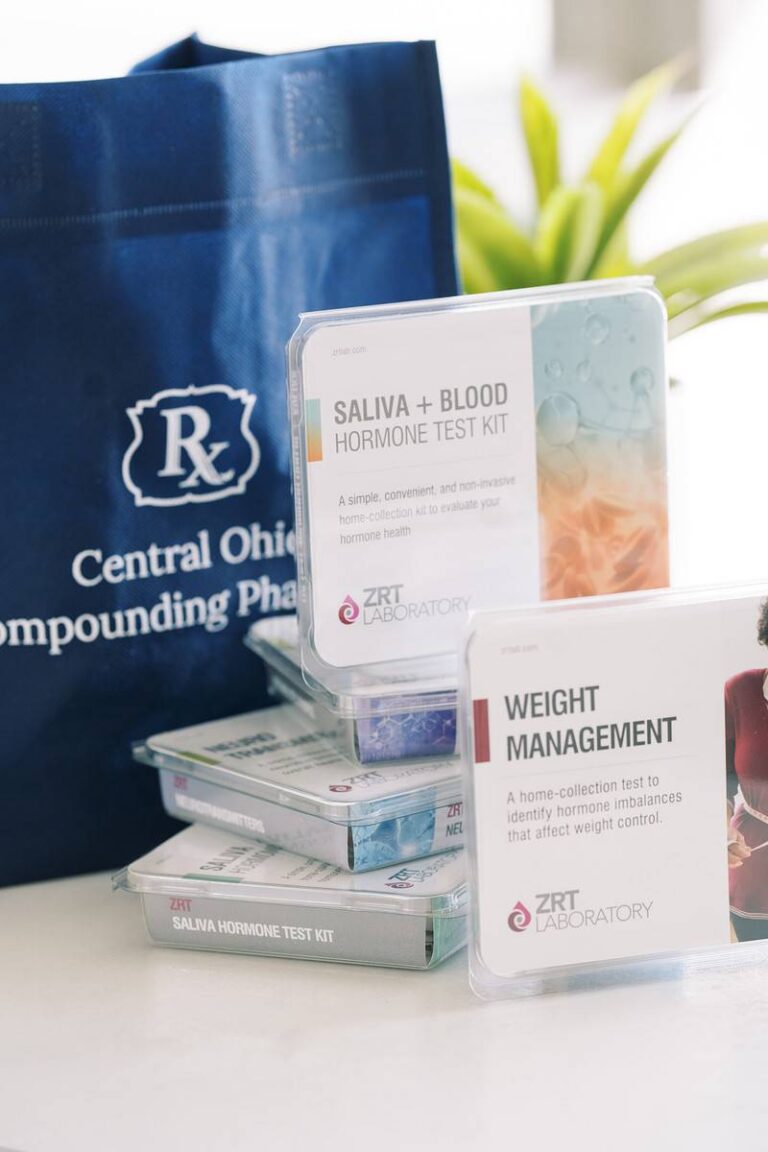
Lab testing may help guide the conversation, but it’s only one part of the full clinical picture. A provider may consider:
- Current symptoms
- Menopause or perimenopause stage
- Personal and family medical history
- Whether the patient still has a uterus
- Current medications and supplements
- Prior response to hormone therapy
- Patient preferences and ability to use the medication consistently
Patients should also ask about adding progesterone as part of their hormone therapy plan.
A Skin-Applied Option for Patients Affected by Patch Access Issues
For patients who have used an estrogen patch, consistency may be an important part of the routine. When patches are difficult to obtain, refill delays or product changes may disrupt that routine.
A compounded estrogen cream may be discussed when a prescribed patch is unavailable, difficult to fill, or not fitting the patient’s current needs. Patients should not switch from a patch to a cream, combine products, or adjust dosing unless directed by their prescriber.
Dosing Flexibility: Why It Matters for Some Women
One reason providers may consider compounded estrogen cream is dosing flexibility. Commercial products are available only in specific strengths and dosage forms. A compounded preparation may allow the prescriber to specify the strength, amount, and dosage form for a patient’s individual care plan.
This may be helpful when:
- A patient needs a dose not available commercially
- A provider wants gradual dose changes
- A patient has difficulty using a patch consistently
- A prescriber wants a measured topical preparation
- A patient has ingredient sensitivities that need to be reviewed
Common Compounded Estrogen Cream Options Providers May Consider
Compounded estrogen creams may vary depending on the prescriber’s directions. Common provider-directed options may include:
- Estradiol-only cream: Estradiol is a form of estrogen commonly used in hormone therapy. A provider may consider this option when discussing a skin-applied estrogen plan.
- Estriol and estradiol combination cream: Some compounded estrogen creams include both estriol and estradiol. The exact ratio and strength are determined by the prescriber based on the patient’s needs and care plan.
- Estrogen with separate progesterone therapy: Progesterone may be discussed as part of the broader hormone therapy plan. Progesterone may be prescribed separately as a capsule, cream, or another dosage form depending on the prescriber’s recommendation.
Compounded estrogen creams are not automatically interchangeable with estradiol patches. Dose, absorption, application site, and monitoring may differ.
Proper Application Matters
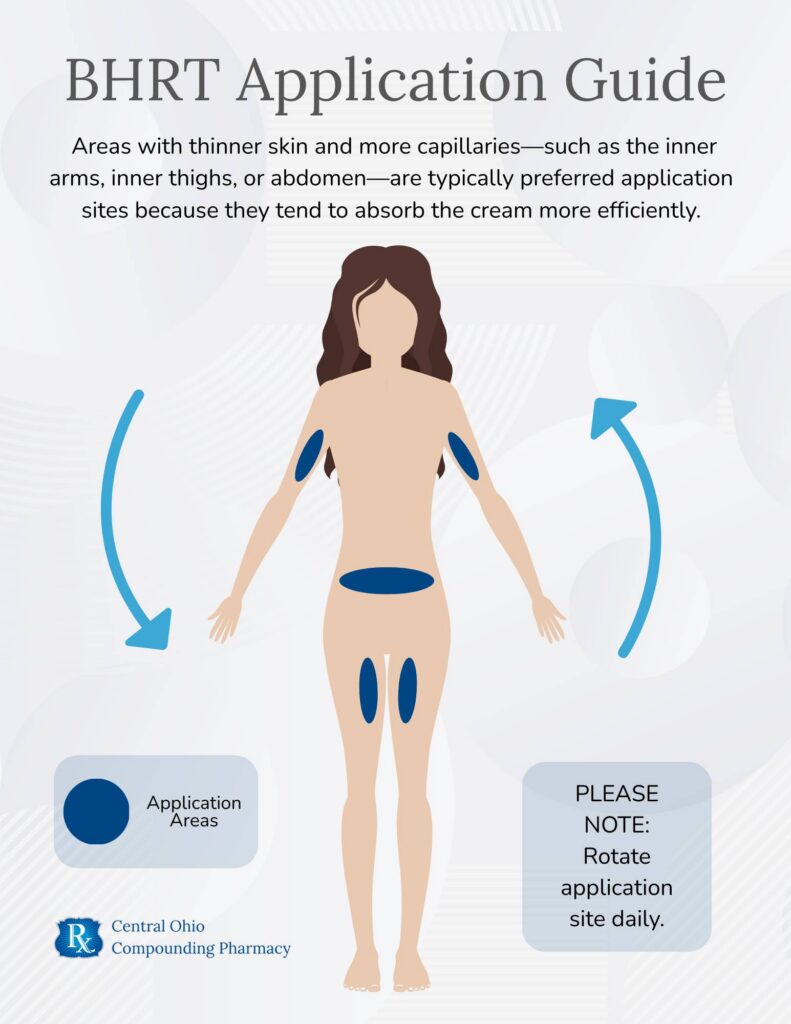
Hormone creams should be applied exactly as prescribed. The amount used, timing, application site, and consistency may all affect how the medication fits into the patient’s care plan.
Patients should follow the prescription label and provider instructions carefully. Common skin-applied sites may include the inner arm or inner thigh, depending on the prescription.
Important application reminders include:
- Apply only the prescribed amount
- Use only the directed application site
- Allow the cream to dry before covering the area
- Wash hands after applying
- Avoid skin-to-skin transfer to others
- Do not change clicks, pumps, or application areas without provider guidance
Questions to Ask Before Switching From a Patch to a Cream
Patients affected by patch access issues may want to ask their provider or pharmacist:
- Is my current estrogen dose still appropriate?
- Would a compounded estrogen cream fit my care plan?
- Should progesterone be part of my therapy?
- How should symptoms be monitored after a change?
These questions may help patients have a clearer conversation with their healthcare provider.
How Central Ohio Compounding Pharmacy Supports the Conversation
Central Ohio Compounding Pharmacy works with prescribers to prepare patient-specific compounded hormone medications when appropriate. Our pharmacists may help patients understand prescription directions, application instructions, refill planning, and questions to bring back to their healthcare provider.
Central Ohio Compounding Pharmacy is located in Worthington, Ohio, and works with patients and prescribers throughout Central Ohio. Our pharmacy team may help clarify prescription details, application instructions, and questions patients may want to bring back to their healthcare provider.

Lucy Andrews, PharmD
We also offer educational resources to support informed, evidence-based care.
Central Ohio Compounding Pharmacy
5625 N. High Street,
Worthington, OH 43085
Frequently Asked Questions About Compounded Estrogen Cream
Is compounded estrogen cream the same as an estrogen patch?
No. Both may be applied to the skin, but they are different dosage forms. The dose, absorption, application site, schedule, and monitoring plan may differ.
Who may want to ask about compounded estrogen cream?
Patients may want to ask about compounded estrogen cream if they are experiencing perimenopause or menopause symptoms, having trouble filling a prescribed estrogen patch, needing provider-directed dosing flexibility, or having difficulty with another dosage form.
Can I switch from an estrogen patch to estrogen cream?
A compounded estrogen cream may be a good option to discuss with your healthcare provider, especially if you are having trouble filling your estradiol patch consistently, experiencing manufacturer changes, or need more flexibility in your dosing plan. Estrogen creams may offer a skin-applied alternative that your provider can prescribe based on your symptoms, lab review, medical history, and therapy goals.
Where is compounded estrogen cream applied?
The application site depends on the prescription. Some patients may be directed to apply cream to areas such as the inner arm or inner thigh, but they should always follow their prescriber’s instructions and the prescription label.
Why might dosing flexibility matter?
Commercial hormone products come in set strengths and forms. A compounded cream may allow a prescriber to specify a patient-specific strength and amount when appropriate.
Do I need labs before using estrogen cream?
Your healthcare provider may order labs as part of the evaluation, but labs are only one part of the hormone therapy conversation. Symptoms, medical history, risk factors, and goals also matter.
Do I need progesterone with estrogen cream?
Yes, especially those who still have a uterus. Even in patients without a uterus, progesterone therapy offers many long-term health benefits. This should be discussed with a healthcare provider because hormone therapy recommendations depend on individual health history and goals.
References
- American College of Obstetricians and Gynecologists. (n.d.). Hormone therapy for menopause. Link
- Metcalf, C. A., Duffy, K. A., Page, C. E., & Novick, A. M. (2023). Cognitive problems in perimenopause: A review of recent evidence. Current Psychiatry Reports, 25(10), 501–511. Link
- Newman, M. S., Saltiel, D., Smeaton, J., & Stanczyk, F. Z. (2023). Comparative estrogen exposure from compounded transdermal estradiol creams and Food and Drug Administration-approved transdermal estradiol gels and patches. Menopause, 30(11), 1098–1105. Link
- North American Menopause Society. (2022). The 2022 hormone therapy position statement of The North American Menopause Society. Menopause, 29(7), 767–794. Link
- Santoro, N., Braunstein, G. D., Butts, C. L., Martin, K. A., McDermott, M., & Pinkerton, J. V. (2016). Compounded bioidentical hormones in endocrinology practice: An Endocrine Society scientific statement. The Journal of Clinical Endocrinology & Metabolism, 101(4), 1318–1343. Link
- Stuenkel, C. A., Davis, S. R., Gompel, A., Lumsden, M. A., Murad, M. H., Pinkerton, J. V., & Santen, R. J. (2015). Treatment of symptoms of the menopause: An Endocrine Society clinical practice guideline. The Journal of Clinical Endocrinology & Metabolism, 100(11), 3975–4011. Link
- Stute, P., Walker, L. J., Eicher, A., Pavicic, E., Kolokythas, A., Theis, S., von Gernler, M., von Wolff, M., & Vollrath, S. (2023). Progestogens for endometrial protection in combined menopausal hormone therapy: A systematic review. Best Practice & Research Clinical Endocrinology & Metabolism, 38(1), 101815. Link
- Talaulikar, V. (2022). Menopause transition: Physiology and symptoms. Best Practice & Research Clinical Obstetrics & Gynaecology, 81, 3–7. Link
- U.S. Food and Drug Administration. (2025, September 16). Compounding and the FDA: Questions and answers. Link
- Zhang, Z., DiVittorio, J. R., Joseph, A. M., & Correa, S. M. (2021). The effects of estrogens on neural circuits that control temperature. Endocrinology, 162(8). Link