
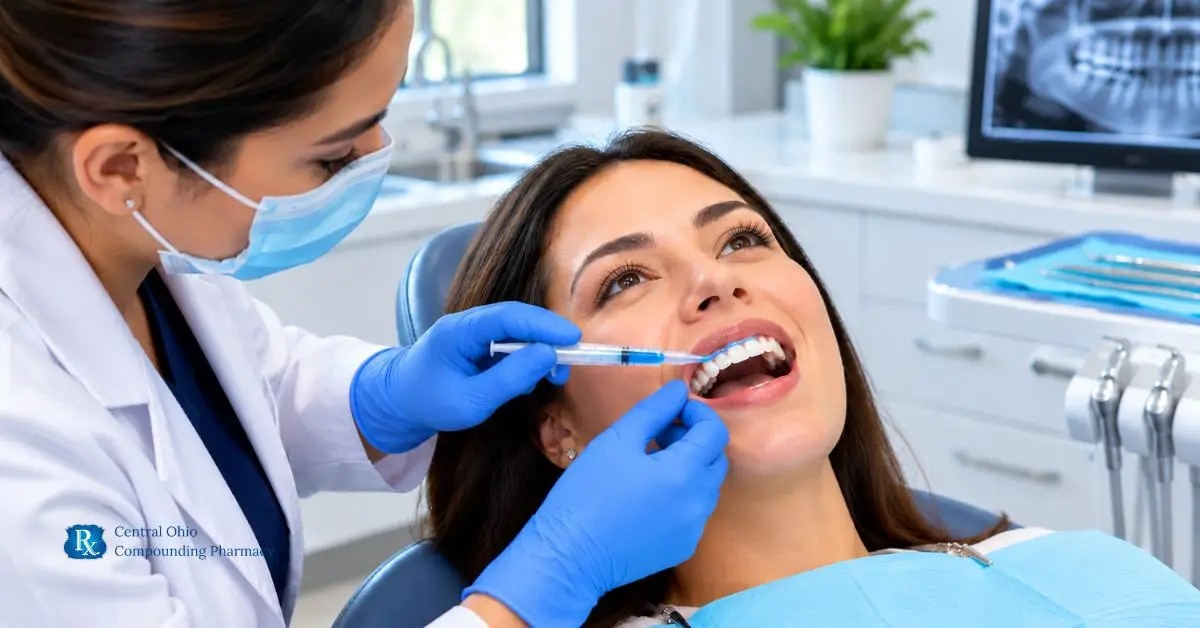
Dental Anesthetic Gel: Potential Benefits for Patients and Dental Practices
Quick Answer: TAC ALT Dental Gel is a compounded topical preparation containing lidocaine HCl, tetracaine HCl, and phenylephrine HCl. Lidocaine and tetracaine provide surface anesthesia, while phenylephrine serves as a vasoconstrictor adjunct. Research on topical dental anesthetics suggests they may reduce discomfort associated with needle puncture in some clinical settings, and lidocaine/tetracaine/phenylephrine combinations have also been studied for topical anesthesia during certain dental procedures.
When clinically appropriate, topical anesthesia may support procedural comfort and contribute to a patient-focused dental experience. Central Ohio Compounding Pharmacy has experience supporting dental practitioners throughout Ohio with compounded dental formulations. Ohio dental professionals with questions about TAC ALT Dental Gel or other dental compounding options may contact our pharmacists to discuss formulation considerations for their patients.
What Is Dental Anesthetic Gel?
Dental anesthetic gel is a topical local anesthetic preparation applied directly to oral mucosa. Depending on the prescription and clinical application, a formulation may contain anesthetic ingredients such as lidocaine, tetracaine, or a combination of local anesthetics.
Topical anesthetics act at the surface of the tissue. They are different from injected local anesthetics, which are used when deeper anesthesia is required for a dental procedure. Reviews of local anesthesia in dentistry describe topical anesthesia as one component of local anesthetic care, particularly when surface anesthesia is desired before needle penetration.
When a compounded dental anesthetic gel is prescribed, the dentist and pharmacist may work together on the prescribed ingredients, concentration, dosage form, and other formulation details based on the intended clinical use.
Potential Benefits of Topical Anesthetic Gel Before Dental Injections
Lidocaine HCl/Tetracaine HCl/Phenylephrine HCl (TAC ALT) Dental Gel
TAC ALT Dental Gel combines the local anesthetics lidocaine and tetracaine with phenylephrine, a vasoconstrictor. Lidocaine and tetracaine provide the topical anesthetic activity, while phenylephrine serves as an adjunct rather than as a numbing agent.
What Research Says About Topical Anesthesia Before Injection
A systematic review and meta-analysis evaluated 22 randomized controlled trials involving 1,029 patients. The authors found that topical anesthetics reduced pain associated with needle puncture in several studies, with statistically significant findings for maxillary vestibular and palatal needle punctures.
Additionally, earlier randomized clinical research found lidocaine topical agents reduced pain associated with needle insertion compared with placebo under the study conditions.
What Research Says About TAC Alternate in Dentistry
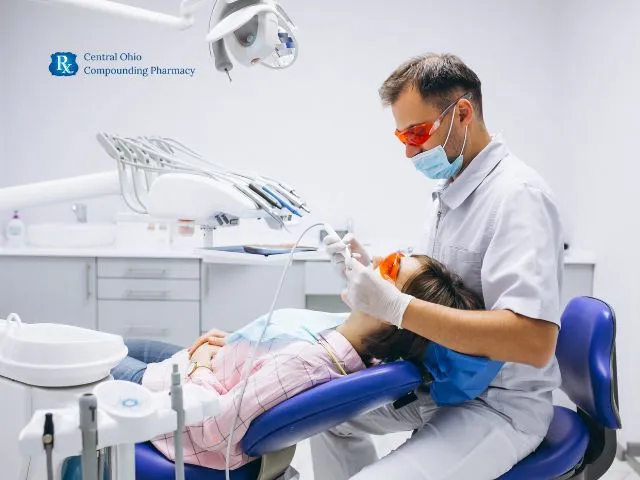
Research has also evaluated TAC Alternate specifically for dental procedures. In a randomized, double-blind crossover study, a compounded preparation containing 20% lidocaine, 4% tetracaine, and 2% phenylephrine was compared with 20% benzocaine during placement of orthodontic temporary anchorage devices (TADs). The TAC Alternate preparation was associated with significantly lower pain ratings and a higher success rate than benzocaine under the study conditions. A second clinical study comparing the same TAC Alternate combination with a 2.5% lidocaine/2.5% prilocaine periodontal gel found that TAC Alternate provided adequate topical anesthesia for TAD placement with a shorter average onset time under the conditions evaluated.
These findings show that lidocaine/tetracaine/phenylephrine combinations have been studied as topical anesthetics in dentistry. However, the TAC Alternate studies involved orthodontic TAD placement rather than routine pre-injection numbing, so their findings should not be interpreted as direct evidence that the same formulation reduces pain from a dental anesthetic injection. The prescribed concentration, amount applied, contact time, procedure, and individual patient should all be considered when selecting a topical anesthetic.
For patients, this means a topical anesthetic may address one very specific part of the procedure: the sensation associated with the needle entering surface tissue.
That distinction matters. Dental anesthetic gel should not be presented as making an entire procedure painless or as replacing injectable local anesthesia when deeper anesthesia is necessary.
When Might a Compounded Dental Anesthetic Be Considered?
Commercial topical anesthetics meet the needs of many dental patients. A compounded preparation may be considered when a prescriber identifies a patient-specific or procedural need that is not addressed by an available manufactured product.
Compounding may give the prescriber flexibility in the prescribed active ingredients, concentration, dosage form, quantity, and directions for use. For TAC ALT Dental Gel, the prescribing dentist determines whether a lidocaine/tetracaine/phenylephrine formulation is appropriate based on the patient, procedure, application site, and intended use.
Central Ohio Compounding Pharmacy pharmacists are available to discuss formulation considerations with dental practitioners throughout Ohio.
Clinical Considerations for Dental Practitioners
Topical anesthetics should be selected and used with consideration of the patient’s medical history, allergies, application site, amount applied, contact time, and other local anesthetics used during the appointment. TAC ALT Dental Gel contains lidocaine and tetracaine as local anesthetic components and phenylephrine as a vasoconstrictor adjunct.
Published studies of TAC Alternate evaluated specific concentrations, application methods, and dental procedures. Findings from one formulation or procedure should not automatically be applied to other concentrations or uses. Compounded medications are not FDA-approved, and prescribing decisions should be based on the clinician’s judgment and the individual patient’s needs.
How TAC ALT Dental Gel May Support the Patient Experience
Procedural Comfort, Practice Reputation, and Referrals
Attention to procedural comfort may have value beyond a single appointment.
Dental patients evaluate their experience through multiple factors, including communication, confidence in the provider, treatment quality, and how the dental team responds to individual concerns. A topical anesthetic does not independently create patient loyalty or generate referrals, but thoughtfully addressing procedural comfort may contribute to the broader experience patients remember.
For a dental practice, measures that demonstrate attention to the patient’s experience — including explaining procedures and considering appropriate methods of surface anesthesia — may become part of the overall impression patients take away from their visit.
Those positive experiences may support satisfaction, patient loyalty, willingness to return, and willingness to recommend the practice to others.
Dental Compounding Pharmacy in Ohio
Since 1997, Central Ohio Compounding Pharmacy has served patients and prescribers from our Worthington and Columbus/Arena District locations, with prescription shipping available throughout Ohio.
For dental compounds, prescribers specify the active ingredients, strength, dosage form, quantity, and directions. Our pharmacists can discuss formulation questions, and clinicians can prescriber via Blend Scripts or may request access to our Dental Gel and Dental Paste Prescription forms.
Ready to Prescribe?
Dental practitioners can contact our pharmacy with formulation questions.
Now Offering Blend Scripts: An Easier Way to Prescribe
Prescribers can now submit compounded prescriptions electronically through Blend Scripts, an ePrescribing platform designed specifically for compounding pharmacies. Interested in getting started? Contact our team to learn more and enroll at 614-847-0109 or customerservice@cocprx.com.
Frequently Asked Questions About TAC ALT Dental Gel
What is TAC ALT Dental Gel?
TAC ALT Dental Gel is a compounded topical preparation containing lidocaine HCl, tetracaine HCl, and phenylephrine HCl. Lidocaine and tetracaine are local anesthetics that provide topical anesthetic activity. Phenylephrine is a vasoconstrictor included as an adjunct rather than as the primary numbing ingredient.
What does topical dental anesthetic gel do?
A topical dental anesthetic is applied to oral tissue to provide temporary surface anesthesia. Research on topical anesthetics suggests they may reduce discomfort associated with needle penetration in some dental applications, although clinical results vary according to the formulation, application site, and procedure.
Has TAC Alternate been studied in dentistry?
Yes. Clinical studies have evaluated TAC Alternate formulations containing lidocaine, tetracaine, and phenylephrine during placement of orthodontic temporary anchorage devices. These studies provide evidence that the combination has been used as topical anesthesia in dentistry, but they did not specifically evaluate routine pre-injection numbing.
Does TAC ALT Dental Gel replace injectable local anesthesia?
Not necessarily. Topical anesthetics primarily provide surface anesthesia. Dental procedures requiring anesthesia of deeper tissues may still require an injectable local anesthetic.
What roles do lidocaine, tetracaine, and phenylephrine have in the formulation?
Lidocaine and tetracaine provide the local anesthetic activity. Phenylephrine is a vasoconstrictor and does not provide the primary numbing effect.
Is a compounded TAC ALT gel automatically stronger or more effective than other topical anesthetics?
No. Clinical evidence is formulation-specific. Response may vary according to the ingredients, concentrations, formulation base, amount applied, contact time, application site, and procedure. Selection of a topical anesthetic should be based on the prescriber’s clinical judgment and the individual patient’s needs.
How may topical anesthetic gel support the patient experience?
When clinically appropriate, topical anesthesia may provide surface numbing before certain procedures. Explaining why the medication is being used and what the patient should expect may also demonstrate attention to procedural comfort and contribute to the overall patient experience.
May attention to patient comfort support referrals and word-of-mouth?
Research has found associations between dental patient satisfaction, patient-provider relationships, loyalty, intention to recommend, and word-of-mouth behavior. Topical anesthesia is only one component of the broader patient experience and should not be presented as directly causing referrals.
References
Decloux, D., & Ouanounou, A. (2021). Local anaesthesia in dentistry: A review. International Dental Journal, 71(2), 87–95. https://doi.org/10.1111/idj.12615
El Dalatony, M. M., Alshareef, R. I., Alkahtani, A. R., Alhajri, S. M., Alhumaidany, T. M., AlQarni, W. A., Almuaddi, A. M., & Aldossary, M. S. (2023). Patient satisfaction as a determinant of patient loyalty to the dentist in dental clinics. Journal of Patient Experience, 10, 23743735231166506. https://doi.org/10.1177/23743735231166506
Jung, Y. S., Yang, H. Y., Choi, Y. H., Kim, E. K., Jeong, S. H., Cho, M. J., Nam, S. H., & Song, K. B. (2018). Factors affecting use of word-of-mouth by dental patients. International Dental Journal, 68(5), 314–319. https://doi.org/10.1111/idj.12387
Kwong, T. S., Kusnoto, B., Viana, G., Evans, C. A., & Watanabe, K. (2011). The effectiveness of Oraqix versus TAC(a) for placement of orthodontic temporary anchorage devices. The Angle Orthodontist, 81(5), 754–759. https://doi.org/10.2319/020811-91.1
Maia, F. P. A., Araujo Lemos, C. A., de Souza Andrade, E. S., de Morais, S. L. D., do Egito Vasconcelos, B. C., & Pellizzer, E. P. (2022). Does the use of topical anesthetics reduce the perception of pain during needle puncture and anesthetic infiltration? Systematic review and meta-analysis of randomized controlled trials. International Journal of Oral and Maxillofacial Surgery, 51(3), 412–425. https://doi.org/10.1016/j.ijom.2021.06.005
Reznik, D. S., Jeske, A. H., Chen, J. W., & English, J. (2009). Comparative efficacy of 2 topical anesthetics for the placement of orthodontic temporary anchorage devices. Anesthesia Progress, 56(3), 81–85. https://doi.org/10.2344/0003-3006-56.3.81
Rosa, A. L., Sverzut, C. E., Xavier, S. P., & Lavrador, M. A. (1999). Clinical effectiveness of lidocaine and benzocaine for topical anesthesia. Anesthesia Progress, 46(3), 97–99. https://pubmed.ncbi.nlm.nih.gov/11692349/
Szabó, R. M., Buzás, N., Braunitzer, G., Shedlin, M. G., & Antal, M. Á. (2023). Factors influencing patient satisfaction and loyalty as perceived by dentists and their patients. Dentistry Journal, 11(9), 203. https://doi.org/10.3390/dj11090203