
BHRT BLOG SERIES
Navigating Hormonal Changes: Personalized Options for Women’s Wellness
Hormonal shifts during perimenopause and menopause can affect nearly every aspect of a woman’s physical and emotional well-being—from sleep quality and mood regulation to energy levels, sexual health, and joint health. While mass-produced, commercial therapies are widely used, many women and their healthcare providers are exploring more personalized, compounded options to manage these changes more effectively.
This blog series offers an educational look at bioidentical hormone replacement therapy (BHRT) from a compounding pharmacy perspective, focusing on specific medications and how they may be used to support women’s wellness. Each part of the series highlights a unique compounded hormone replacement therapy—explaining its form, common dosing, and clinical considerations—to help patients and providers understand what’s possible when care is individualized.
Part 1: Understanding Oral Progesterone SR Capsules for Perimenopausal Sleep & Mood Support
Perimenopause and menopause are times of significant hormonal fluctuation, often accompanied by disruptive symptoms such as sleep disturbances, mood swings, and heightened anxiety. Many women find themselves struggling with restless nights, increased irritability, or emotional sensitivity that doesn’t respond well to conventional, mass-produced medications. One popular compounded option that may offer support during this transition is oral sustained-release (SR) progesterone capsules.
“[Progesterone] has been shown to relieve menopausal symptoms and improve sleep without affecting cognition, blood lipids or cardiovascular risk factors.”
Source: Maturitas
What Are Oral Progesterone SR Capsules?
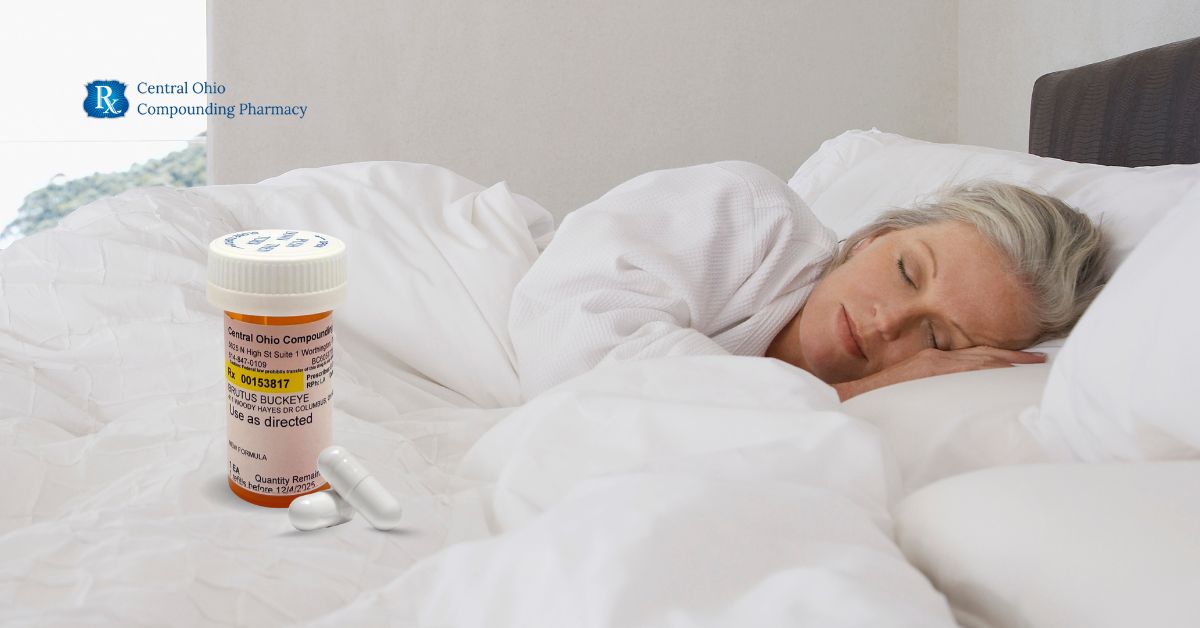
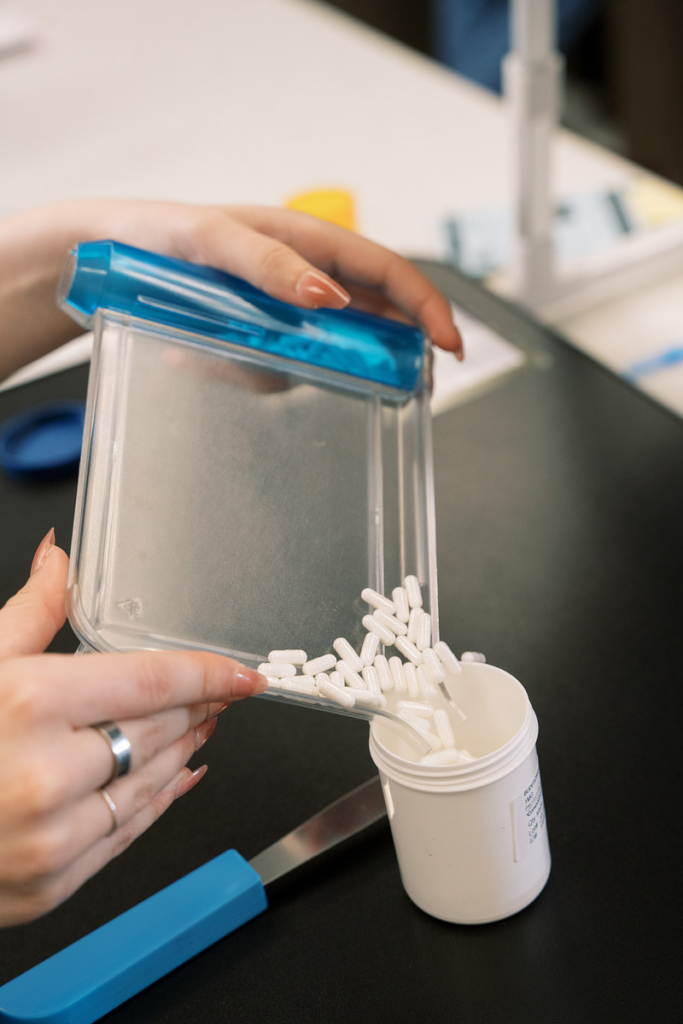
Oral progesterone SR capsules are a compounded form of bioidentical hormone replacement therapy (BHRT). Available in strengths like 50mg, 100mg, 150mg, and 200mg, or other custom strengths, these capsules are typically taken once daily at bedtime. They are designed to slowly release progesterone over several hours, which may mimic the body’s natural rhythm and promote more restful sleep.
How Progesterone Works in the Body
Progesterone plays several essential roles in the female body, particularly in relation to the menstrual cycle and the nervous system. During perimenopause, progesterone levels decline more rapidly than estrogen, potentially leading to an estrogen-dominant state. This hormonal imbalance may contribute to symptoms such as:
- Difficulty falling or staying asleep
- Increased anxiety or mood swings
- Heavy or irregular periods
Progesterone supports GABA (gamma-aminobutyric acid) activity in the brain, a neurotransmitter that helps calm the nervous system. This interaction may help explain why many women experience improved sleep and reduced anxiety when taking progesterone in a sustained-release oral form at bedtime.
Clinical Evidence Supporting Oral Progesterone Use
Several peer-reviewed studies have examined the effects of oral micronized progesterone on sleep and mood.
One study published in The Journal of Clinical Endocrinology & Metabolism (2021) demonstrated that 300mg of oral micronized progesterone taken at bedtime significantly improved sleep quality and decreased the time it took for perimenopausal women to fall asleep.
Another study published in Gynecological Endocrinology (2017) demonstrated that sleep quality of peri-postmenopausal women with insomnia improved dramatically after the first month of progesterone.
These studies suggest that the sedative-like action of progesterone through its GABA-modulating properties may provide therapeutic potential for sleep and mood symptoms common in perimenopause.
Hypothetical Scenarios: When Compounded Progesterone May Be Beneficial for Women in Perimenopause or Menopause
For Patients:
- Jill, 46: She experiences nightly insomnia, anxiety, and irregular periods. Over-the-counter sleep aids leave her groggy, and Prometrium causes mild allergic reactions due to the peanut oil base. Her provider prescribes a compounded 150mg SR progesterone capsule with an allergen-free base, and she notices improvements in her sleep and mood.
- Maria, 52: Newly entering menopause, Maria has tried standard 100mg doses of progesterone but continues to struggle with early waking and mood swings. A custom 125mg SR formulation is compounded to better fit her response profile and helps her sleep more consistently through the night.
- Tina, 49: She is experiencing symptoms of peri-menopause, including heavy periods, headaches, and mood swings. Her prescriber includes progesterone SR 100mg capsules in her care plan, and she notices a balance of her symptoms since starting progesterone..
For Providers:
- A practitioner treating a patient with sleep maintenance issues may select a sustained-release formula over immediate-release options to prolong sleep benefits through the night.
- Providers working with patients who show sensitivity to excipients in commercial products can utilize compounding to remove potential irritants like soy, gluten, or artificial dyes.
- Functional medicine or integrative health providers may appreciate compounding as a way to individualize care for hormone balance, integrating lab results and symptom tracking into custom BHRT plans.

For Women Exploring Their Options
If you’re struggling with perimenopausal symptoms and haven’t found relief with over-the-counter or commercially available treatments, it might be time to explore compounded hormone therapy. Unlike one-size-fits-all prescriptions, compounded medications offer flexibility in dosing and formulation. For example, some women may respond better to a 100mg capsule, while others may benefit more from a 200mg dose.
Need a Referral to a Trusted Women’s Health Practitioner?
Check out our list of Ohio practitioners we know and trust.
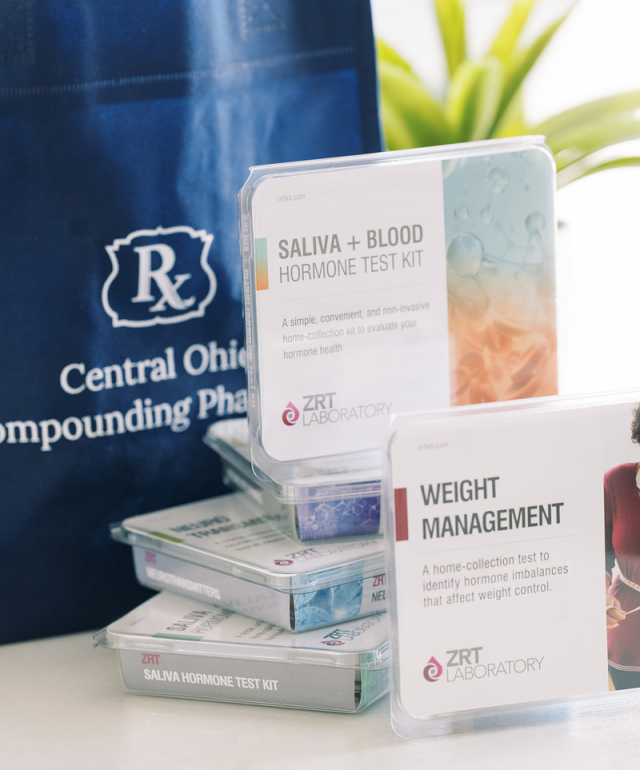
Now is the perfect time to assess your hormone levels (at-home saliva test kits available) and discuss advanced options to gain balance, address specific symptoms, and enhance quality of life.
Talk to your healthcare provider about whether Hormone Replacement Therapy is appropriate for you based on your symptoms, age, and health history. ‘
Our pharmacists can guide you through the journey to optimal health and quality of life. Because oral SR progesterone is compounded using bioidentical hormones, its molecular structure closely matches the progesterone naturally produced by the body, which may improve tolerability.
Always consult with your healthcare provider to assess your hormone levels and determine the right treatment approach for you. Compounded therapy is highly individualized and must be guided by a prescriber with experience in hormone health.
 Lucy Andrews, PharmD
Please schedule a virtual or in-person consultation with our hormone specialist, Lucy Andrews, PharmD.
We also offer educational resources to support informed, evidence-based care.
For Prescribers: Expanding Treatment Options
Healthcare providers seeking to expand their options for managing menopausal symptoms may find oral progesterone SR capsules to be a useful addition to their prescribing toolkit. The availability of multiple strengths (50mg, 100mg, 150mg, 200mg) enables precise titration, making it easier to personalize treatment.
The evening dosing schedule may also enhance compliance, as it coincides with bedtime routines. Additionally, the potential mood and sleep benefits supported by emerging literature may provide meaningful improvements in patients’ quality of life.
By offering compounded BHRT, prescribers can elevate their practice through personalized care that aligns with the latest approaches to hormone health. We’re here to support you with customized options for hormone therapy in alignment with the most current clinical standards. Please don’t hesitate to reach out with questions or for support in discussing next steps.
How to Prescribe: Central Ohio Compounding Pharmacy RX Order Form
To make the prescribing process simple, Central Ohio Compounding Pharmacy provides an easy-to-use RX order form listing all available strengths of oral progesterone SR capsules, as well as other BHRT options. Prescribers can simply check the desired dose (50mg, 100mg, 150mg, or 200mg) and quantity (30, 60, or 90 capsules), then fax in the form directly to the pharmacy.
This streamlined process ensures accuracy, convenience, and quick turnaround times for both patients and providers.
In the News: FDA Removes Black Box Warning for Hormone Therapy
In 2022, the FDA updated its labeling requirements by removing the black box warning for hormone therapy prescriptions. This decision reflects evolving evidence and expert consensus that hormone therapy, when appropriately prescribed, is safe and may hold significant potential for many women.
Stay Tuned for the Next Installment in Our BHRT Blog Series
Coming Soon: Part 2 — Topical Progesterone Cream for Hormone Balance & PMS Support
In Part 2 of our BHRT Menopause Series, we’ll explore topical progesterone cream and how it differs from oral forms in terms of delivery, metabolism, and symptom relief.
COMING UP NEXT
Part 2: Topical Progesterone Cream for Hormone Balance & PMS Support
Part 3: Estriol/Estradiol Vaginal Cream for Vaginal Atrophy and Dryness
Part 4: Testosterone Vaginal Cream for Energy, Libido, and Tissue Health
Part 5: DHEA Vaginal Gel: A Compounded Option for Vaginal Dryness and Hormonal Support
Part 6: Topical Testosterone Cream for Women: A Personalized Approach to Hormonal Wellness
References:
Freeman, E. W., Weinstock, L., Rickels, K. A. R. L., Sondheimer, S. J., & Coutifaris, C. (1992). A placebo‐controlled study of effects of oral progesterone on performance and mood. British journal of clinical pharmacology, 33(3), 293-298. Link
Goletiani, N. V., Keith, D. R., & Gorsky, S. J. (2007). Progesterone: review of safety for clinical studies. Experimental and clinical psychopharmacology, 15(5), 427. Link
Leeangkoonsathian, E., Pantasri, T., Chaovisitseree, S., & Morakot, N. (2017). The effect of different progestogens on sleep in postmenopausal women: a randomized trial. Gynecological Endocrinology, 33(12), 933-936. Link
Mirkin, S. (2018). Evidence on the use of progesterone in menopausal hormone therapy. Climacteric, 21(4), 346-354. Link
Mueck, A. O., & Ruan, X. (2019). Will estradiol/progesterone capsules for oral use become the best choice for menopausal hormone therapy?. Climacteric, 22(6), 535-537. Link
Prior, J. C. (2018). Progesterone for treatment of symptomatic menopausal women. Climacteric, 21(4), 358-365. Link
Regidor, P. A. (2014). Progesterone in peri-and postmenopause: a review. Geburtshilfe und Frauenheilkunde, 74(11), 995-1002. Link
Santoro, N. (2016). Perimenopause: from research to practice. Journal of women’s health, 25(4), 332-339. Link
Spark, M. J., & Willis, J. (2012). Systematic review of progesterone use by midlife and menopausal women. Maturitas, 72(3), 192-202. Link
Whitehead, M. I., Townsend, P. T., Gill, D. K., Collins, W. P., & Campbell, S. (1980). Absorption and metabolism of oral progesterone. Br Med J, 280(6217), 825-827. Link
Woodis, C. B., Ghassemi, E., & McLendon, A. N. (2021). Bioidentical Oral 17β-Estradiol and progesterone for the treatment of moderate to severe vasomotor symptoms of menopause. Annals of Pharmacotherapy, 55(9), 1153-1158. Link