

Estimated Read Time: 8–10 minutes
Summary:
This article explains how providers and patients may consider compounded topical pain cream for managing localized and mixed-mechanism pain. It reviews how these customized formulations are prepared, how they differ from commercially available topical medications, and the types of ingredients that may be included based on clinical presentation.
The article also outlines situations where prescribers may consider compounded topical therapy, along with examples of commonly used ingredient categories such as anti-inflammatory agents, local anesthetics, and neuromodulating medications.
In addition, it discusses how topical delivery works, the role of compounding pharmacies in supporting formulation decisions, and key regulatory considerations related to compounded medications.
What You’ll Learn:
- What a compounded topical pain cream is
- How it differs from standard topical medications
- Common ingredient categories used in formulations
- When this approach may be considered in clinical practice
- How compounding supports individualized medication preparation
Who This Article Is For:
- Healthcare providers managing localized or complex pain
- Clinics exploring topical or combination therapy options
- Patients seeking to better understand provider-directed medical approaches
Why This Matters:
Localized pain often involves multiple contributing factors. A compounded topical pain cream may provide an option for addressing specific clinical needs through customized formulation design and targeted application.
Compounded Topical Pain Cream: Uses, Ingredients & Clinical Considerations
Localized pain can involve multiple underlying mechanisms, which may make standard therapy options less aligned with the clinical presentation. In these cases, a compounded topical pain cream may be considered as part of an individualized, provider-directed approach
What Is a Compounded Topical Pain Cream?
A compounded topical pain cream is a customized medication prepared by a licensed compounding pharmacy based on a prescriber’s instructions. Patients apply these formulations directly to a specific area of discomfort and may include one or more active ingredients selected for the clinical situation.
Unlike commercially available products, a compounded topical pain cream allows adjustments in ingredient selection, concentration, and delivery base.
Key Takeaways:
- A licensed compounding pharmacy prepares a compounded topical pain cream based on a valid prescription
- It may include multiple ingredients addressing different pain mechanisms
- Providers localize application to a specific area
- Through compounding pharmacies, providers can adjust strengths and components
- Compounded medications are not FDA-approved and follow compounding regulations
Addressing Localized Pain in Clinical Practice
Localized pain is frequently encountered in outpatient care. While oral medications are commonly used, they are not always ideal for every patient.
Some individuals experience gastrointestinal intolerance, while others prefer to limit systemic exposure due to existing conditions or concurrent medications. In addition, pain may involve multiple mechanisms, including inflammatory, neuropathic, and muscular components.
In these cases, a compounded topical pain cream may be considered as part of an individualized approach.
Topical therapies have been evaluated as an option for localized pain, with some studies suggesting reduced systemic exposure compared to oral medications (Derry et al., 2017).
How a Compounded Topical Pain Cream Differs from Standard Options
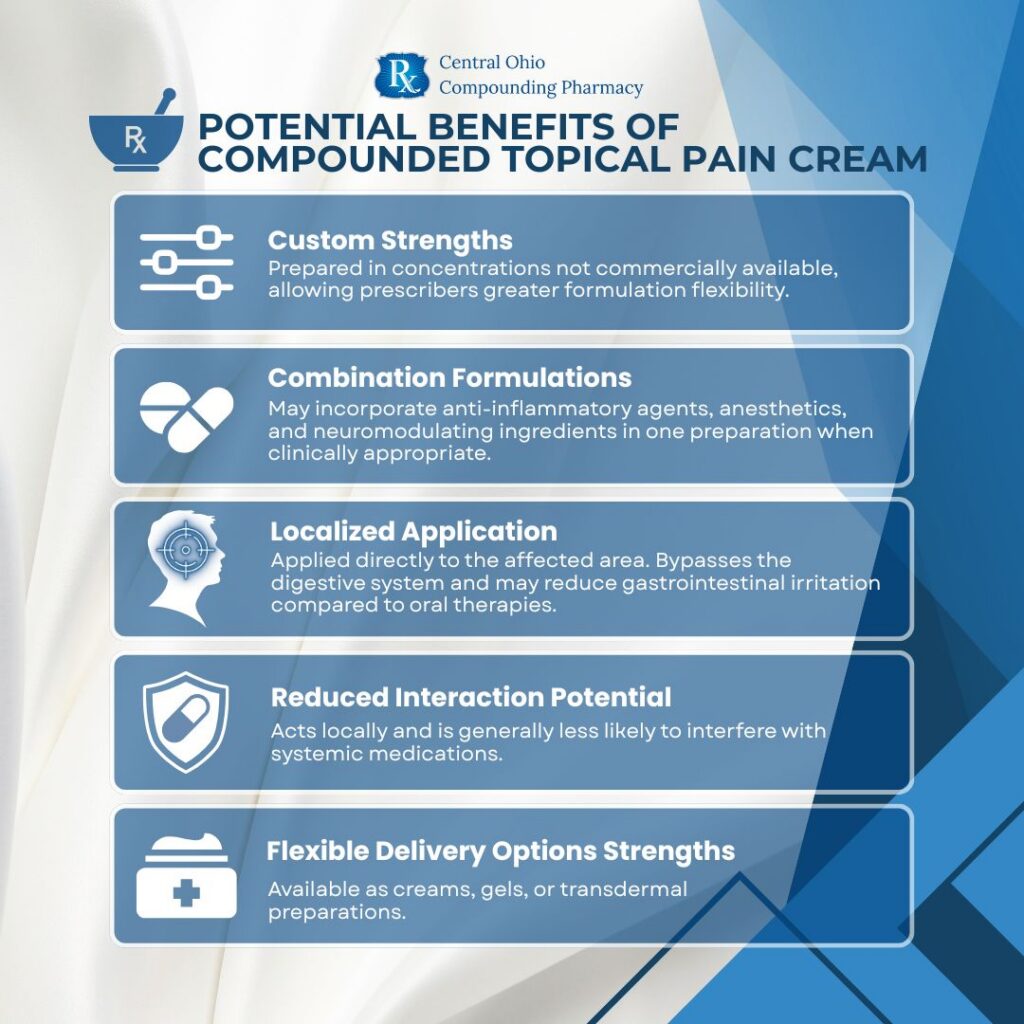
- Adjustable Strengths: Prescribers may request concentrations not available in manufactured products.
- Combination Formulations: More than one active ingredient may be included when clinically appropriate.
- Targeted Application: Patients apply the medication directly to the affected area.
- Flexible Bases: Different bases may be selected to support absorption and patient preference.
These differences allow a compounded topical pain cream to align more closely with the clinical presentation.
How a Compounded Topical Pain Cream Works
A compounded topical pain cream delivers medication through the skin to underlying tissues. After application, active ingredients pass through the outer layers of the skin and may interact with local pain-related pathways.
The extent of absorption depends on:
- The formulation base
- The properties of the ingredients
- The condition of the skin
Percutaneous absorption has been widely studied, and drug penetration may vary based on molecular characteristics and vehicle composition (Prausnitz & Langer, 2008).
Common Ingredients in a Compounded Topical Pain Cream
A compounded topical pain cream may include ingredients from different clinical categories. The prescriber determines the final formulation.
Anti-Inflammatory Agents
Used in inflammatory pain conditions such as joint or soft tissue discomfort.
Examples may include:
- Diclofenac
- Ketoprofen
Topical diclofenac has been evaluated in randomized trials and systematic reviews for osteoarthritis, with findings suggesting improvements in pain and function in some patients (da Costa et al., 2017).

Neuropathic Pain Agents
Considered when nerve-related symptoms are present.
Examples may include:
- Lidocaine
- Gabapentin
- Amitriptyline
- Ketamine
- Baclofen
Topical lidocaine has been studied in peripheral neuropathic pain, with randomized controlled trials demonstrating reductions in pain intensity and allodynia in certain conditions (Meier et al., 2003).
Other agents, such as topical amitriptyline and ketamine, have been evaluated in smaller studies and clinical trials, with varying outcomes depending on formulation and condition (Lynch et al., 2005).
Local Anesthetics
Used for localized anesthetic support.
Examples may include:
- Lidocaine
- Bupivacaine
Local anesthetics have been studied for localized pain and procedural use, with topical applications explored in postoperative and procedural settings (Haksever et al., 2014).
Muscle-Related Components
Included when muscle tension contributes to discomfort.
Examples may include:
- Cyclobenzaprine
Multi-ingredient topical formulations that include muscle relaxants have been described in observational studies evaluating complex pain presentations (Safaeian et al., 2016).
When a Compounded Topical Pain Cream May Be Considered
A compounded topical pain cream may be considered when:
- Pain is localized to a specific region
- Oral medications are not well tolerated
- Multiple pain mechanisms are present
- Targeted therapy is preferred
- A combination approach is desired

The prescribing provider makes these decisions based on the patient’s clinical profile.
Example Clinical Scenarios: Compounded Topical Pain Cream
The following examples reflect situations where a compounded topical pain cream may be considered:
- Localized Joint Pain: Topical application may be used when systemic therapy is not preferred.
- Mixed-Mechanism Back Pain: A combination formulation may address overlapping symptoms.
- Localized Neuropathic Discomfort: Symptoms may be confined to a specific area following certain conditions.
- Muscle-Related Pain: Formulations may include ingredients addressing muscle tension.
- Post-Procedure Pain: Localized application may be considered for defined areas of discomfort.
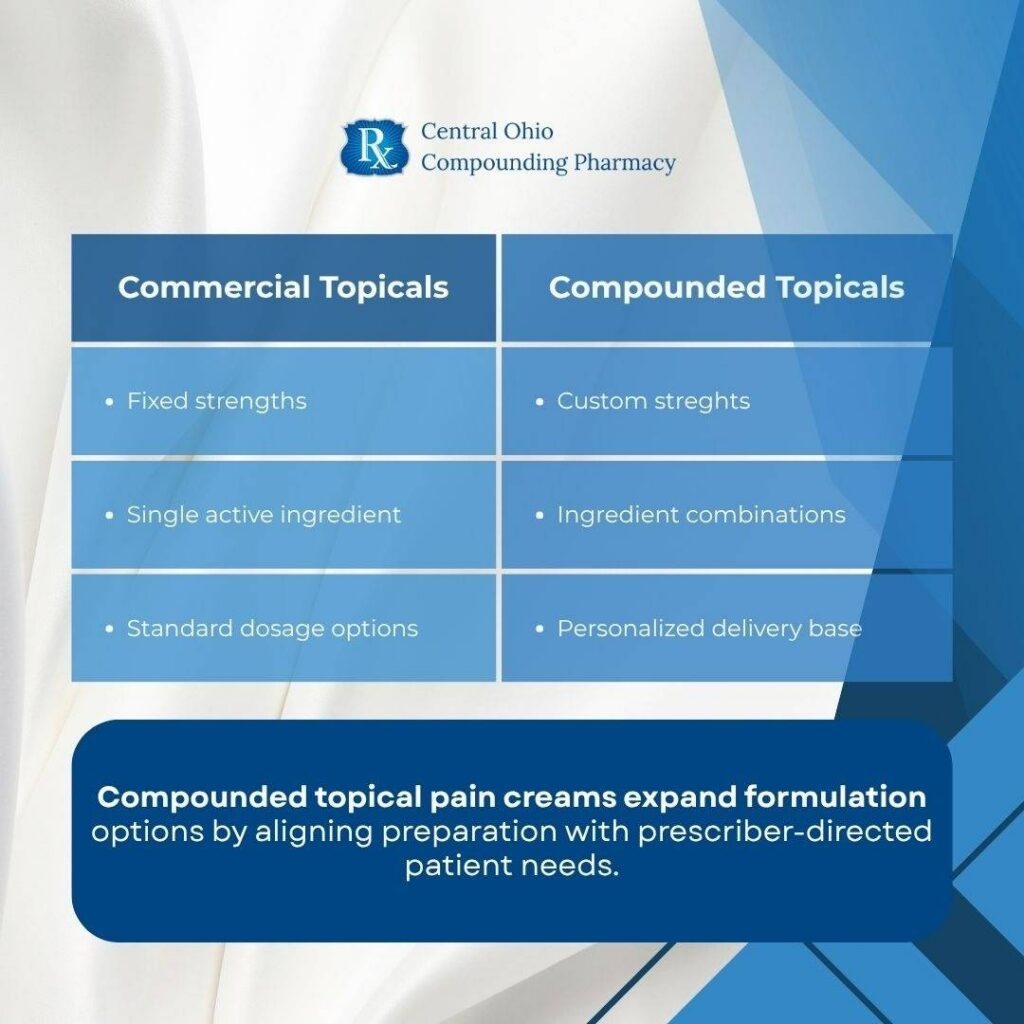
Feature | Compounded Topical Pain Cream | Commercial Topicals |
Ingredients | Single or multiple | Typically single |
Strengths | Adjustable | Fixed |
Formulation | Prescription-based | Pre-manufactured |
Flexibility | High | Limited |
Application | Localized | Localized |
Working with a Compounding Pharmacy
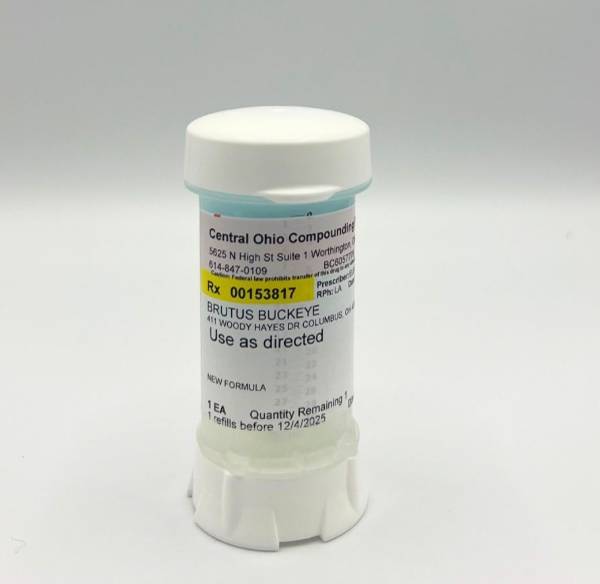
A compounded topical pain cream is prepared based on a prescriber’s instructions. Pharmacists may assist with:
- Ingredient considerations
- Strength adjustments
- Base selection
- Formulation feasibility
A compounding pharmacy creates each preparation to align with the provider’s therapeutic intent.
Compounded Topical Pain Creams in Ohio

Central Ohio Compounding Pharmacy prepares compounded topical pain cream formulations for prescribers in the Central Ohio community and include practice sites in many specialties such as:
- Podiatry
- Arthritis
- Chronic Pain
- Neurology
- Rheumatology
- And more
Frequently Asked Questions About Compounded Topical Pain Creams
What is a compounded topical pain cream used for?
We may use a compounded topical pain cream for localized pain management. It may include ingredients selected based on the clinical presentation.
Are compounded topical pain creams FDA-approved?
Compounded medications are not FDA-approved. They are prepared by licensed pharmacies based on a valid prescription and must follow compounding regulations.
What ingredients are commonly used in a compounded topical pain cream?
Ingredients may include anti-inflammatory agents, anesthetics, and neuromodulating medications, depending on the clinical scenario.
Who may be a candidate for a compounded topical pain cream?
Patients with localized pain or those who do not tolerate standard options may be considered, based on provider evaluation.

Supporting Individualized Pain Management
Pain presentations vary, and approaches often require flexibility. A compounded topical pain cream may be considered when standard options do not fully align with the clinical picture.
Compounded medications are prepared based on a valid prescription and in accordance with applicable state and federal regulations.
References
- Derry, S., Moore, R. A., & Rabbie, R. (2012). Topical NSAIDs for chronic musculoskeletal pain in adults. Cochrane Database of Systematic Reviews, 9, CD007400. Link
- da Costa, B. R., Reichenbach, S., Keller, N., Nartey, L., Wandel, S., Jüni, P., & Trelle, S. (2017). Effectiveness of non-steroidal anti-inflammatory drugs for the treatment of pain in knee and hip osteoarthritis: A network meta-analysis. The Lancet, 390(10090), e21–e33. Link
- Meier, T., Wasner, G., Faust, M., Kuntzer, T., Ochsner, F., Hueppe, M., Bogousslavsky, J., & Baron, R. (2003). Efficacy of lidocaine patch 5% in the treatment of focal peripheral neuropathic pain syndromes: A randomized, double-blind, placebo-controlled study. Pain, 106(1–2), 151–158. Link
- Lynch, M. E., Clark, A. J., Sawynok, J., & Sullivan, M. J. (2005). Topical amitriptyline and ketamine in neuropathic pain syndromes: An open-label study. The Journal of Pain, 6(10), 644–649. Link
- Prausnitz, M. R., & Langer, R. (2008). Transdermal drug delivery. Nature Biotechnology, 26(11), 1261–1268. Link
- Haksever, M., Özmen, S., Akduman, D., & Solmaz, F. (2014). Topical bupivacaine compared to bupivacaine infiltration for post-tonsillectomy pain relief in children: A prospective randomized controlled clinical study. European Archives of Oto-Rhino-Laryngology, 271(9), 2555–2559. Link
- Safaeian, P., Mattie, R., Hahn, M., Plastaras, C. T., & McCormick, Z. L. (2016). Novel treatment of radicular pain with a multi-mechanistic combination topical agent: A case series and literature review. Anesthesiology and Pain Medicine, 6(2), e33322. Link
Compliance Notice
Compounded medications are not FDA-approved products. They are prepared by licensed pharmacies based on a prescriber’s prescription and in accordance with applicable compounding regulations.