
Estimated Read Time: 6–7 Minutes
Blog Summary: Hair loss and hair thinning can affect both men and women and may occur for a variety of reasons, including genetics and hormonal changes. This article explores how compounded topical hair loss treatments containing ingredients such as finasteride, minoxidil, hydrocortisone, and retinoic acid may interact with the scalp and hair follicles. Understanding how these ingredients work may help patients and healthcare providers evaluate personalized treatment approaches for supporting scalp and follicle health.
Hair thinning rarely happens overnight, yet the moment you notice it can feel sudden. Perhaps you catch a glimpse of your scalp in the mirror or a change in how your hair falls. It is a common concern affecting both men and women, and many people search for options such as topical hair loss treatments or personalized compounded medications.
Across Ohio, dermatologists are prescribing compounded topical combinations such as Finasteride, Minoxidil, and Retinoic Acid (Tretinoin) to support scalp health and help maintain hair density.
When standard medications do not match individual needs, Ohio hair loss specialists and dermatologists may collaborate with compounding pharmacists to prepare customized formulations tailored to the patient’s scalp care plan.
Understanding Hair Loss and the Role of DHT
Hair grows in a pattern driven by a delicate biological balance. Hormonal changes, stress, genetics, and nutritional factors may disrupt that rhythm. When these influences persist, new strands may struggle to keep up with natural shedding.
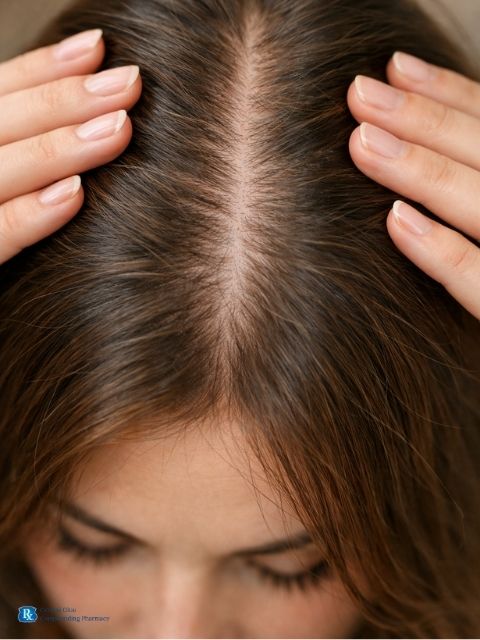
One hormone commonly associated with pattern hair loss is dihydrotestosterone (DHT), an androgen involved in several biological processes in both men and women. In individuals with genetic sensitivity, increased exposure of hair follicles to DHT may contribute to follicle miniaturization, a process in which follicles gradually produce thinner and shorter hair strands.
Environmental and lifestyle factors can also influence scalp condition. Humid summers and cold winters across Ohio may affect scalp hydration and how topical medications interact with the skin.
To maintain consistency in absorption and comfort, Ohio hair loss specialists may sometimes work with compounding pharmacists to prepare prescription formulations designed for scalp-specific application.
Why Dermatologists May Use Combination Topical Therapy
Hormonal activity, follicle stimulation, and scalp renewal processes can all influence hair growth and shedding over time. Because of this complexity, dermatology practitioners sometimes incorporate multiple topical ingredients that support different aspects of scalp physiology.
Commercial medications are manufactured in standardized strengths and dosage forms, which may not always match the specific needs identified during a dermatologic evaluation.
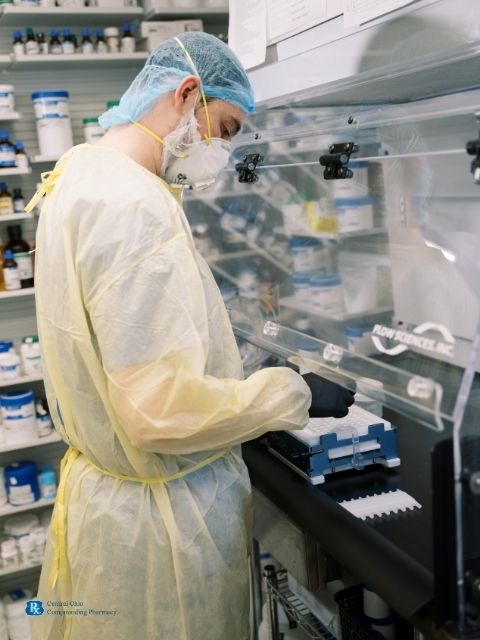
Compounding pharmacies allow dermatologists to request customized topical formulations tailored to an individual patient’s scalp condition and care plan.
Through compounding, pharmacists may prepare:
- Combination topical solutions containing multiple compatible ingredients
- Customized concentrations adjusted by a prescriber
- Specialized bases designed to support scalp comfort and absorption
- Formulations prepared without certain additives or excipients
This flexibility allows hair loss specialists to develop stronger topical preparations when commercially available products do not align with a patient’s needs.
Key Ingredients in Topical Hair Loss Compounds
Among the compounds most commonly incorporated into topical dermatologic hair loss formulations are Finasteride, Minoxidil, and Retinoic Acid (RA). Each works through a different biological pathway that may influence scalp physiology and follicle activity.
Improved circulation may help support the anagen (growth) phase of the hair cycle.
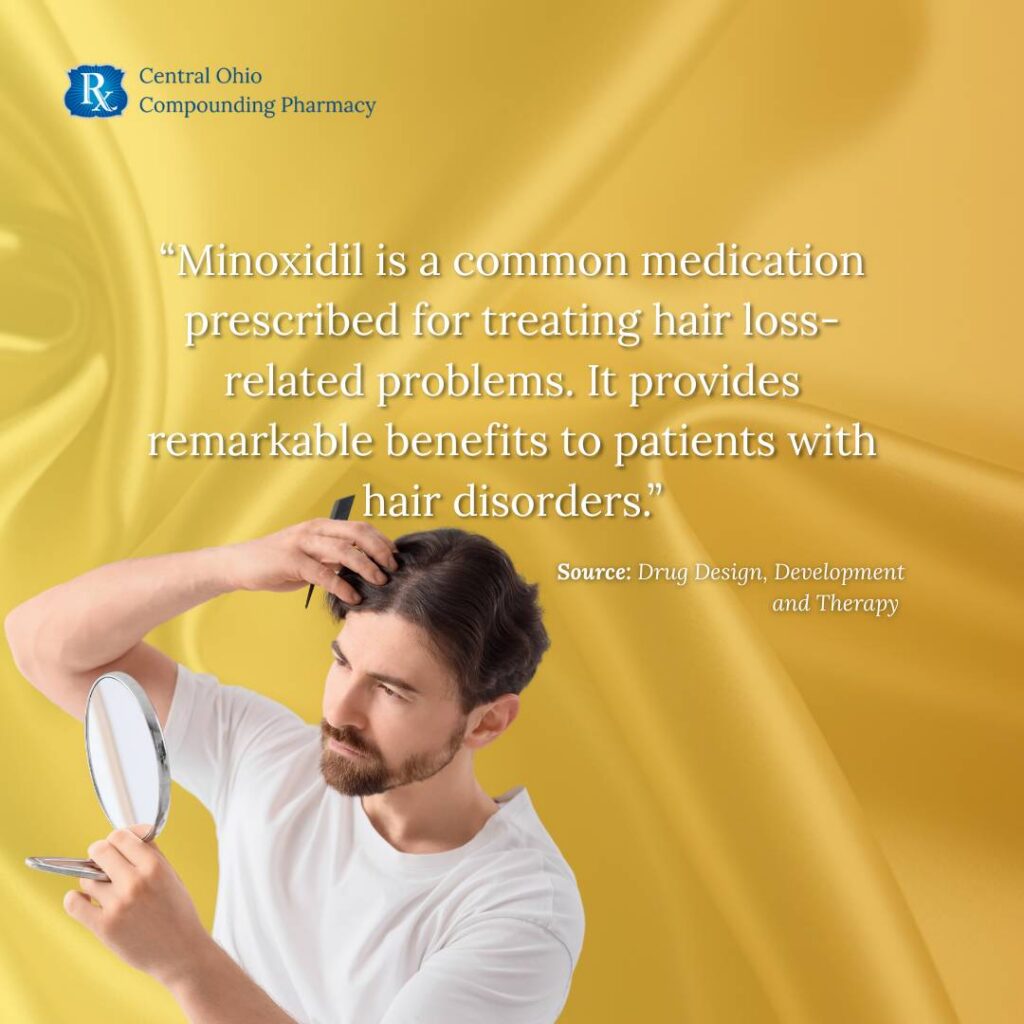
Hair follicles cycle through stages of growth, rest, and shedding. Some research suggests that minoxidil may help prolong the growth phase of the hair cycle and encourage follicles to remain active longer.
These effects may support thicker hair restoration over time in some individuals experiencing hair thinning.
Retinoic Acid (Tretinoin): Supporting Scalp Renewal
Retinoic acid, a derivative of vitamin A, influences skin cell turnover and absorption of topical medications.
Retinoids influence cellular signaling pathways involved in epidermal turnover and keratinocyte differentiation. In other words, retinoids help regulate how skin cells grow and renew themselves. By supporting normal skin turnover, they may help maintain a healthier scalp environment around hair follicles.
In hair loss formulations, retinoic acid may also help increase the penetration of other active ingredients through the outer layer of the skin. By promoting faster skin cell turnover, it may allow topical medications to reach the hair follicle more efficiently.
Hydrocortisone: Reduce Inflammation
Hydrocortisone is classified as a corticosteroid, which has been observed to reduce inflammation and irritation in the skin.
Inflammation around hair follicles may contribute to scalp irritation or conditions that affect follicle health. Hydrocortisone may help calm the scalp environment by reducing redness, itching, and inflammatory responses.
In topical hair formulations, hydrocortisone may also help improve tolerability of other active ingredients by reducing irritation that sometimes occurs with certain medications.
Why Combination Hair Restoration Formulations May Be Considered
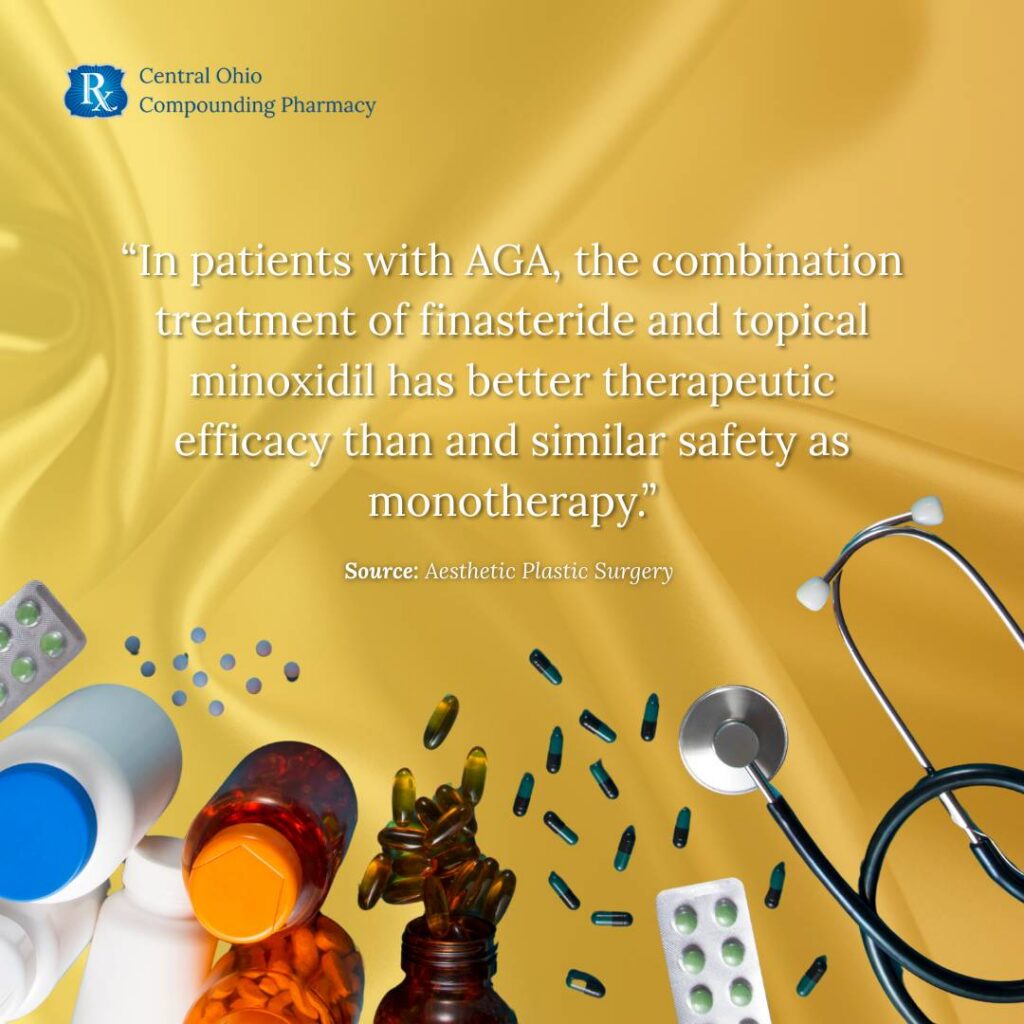
Hair loss can involve several biological factors, including hormonal influences, follicle miniaturization, scalp health, and the hair growth cycle. Because of this complexity, some healthcare providers may prescribe compounded medications that combine multiple ingredients targeting different pathways.
A formulation containing finasteride, minoxidil, hydrocortisone, and retinoic acid may address hormonal factors, circulation, scalp inflammation, and topical absorption in one preparation.
Since compounded medications are customized preparations, they are prescribed by healthcare providers based on individual patient needs.
How Dermatological Specialty Compounding Pharmacies Support Hair Health
Every patient’s scalp is different — what feels comfortable for one person may cause irritation or dryness for another. In dermatologic care, compounding allows prescribers to request that pharmacists prepare prescription formulations:
- Customized concentrations of ingredients such as Finasteride, Minoxidil, Retinoic Acid (Tretinoin), or Hydrocortisone
- Combination topical preparations containing compatible ingredients
- Specialized bases designed to support scalp comfort and consistent application
- Formulations prepared without certain dyes, preservatives, or excipients
These options give dermatology providers additional flexibility when designing individualized scalp and hair care plans.
Compounded medications are not reviewed by the FDA for safety or efficacy. They are prepared by licensed pharmacists based on a prescriber’s individualized prescription for a specific patient.
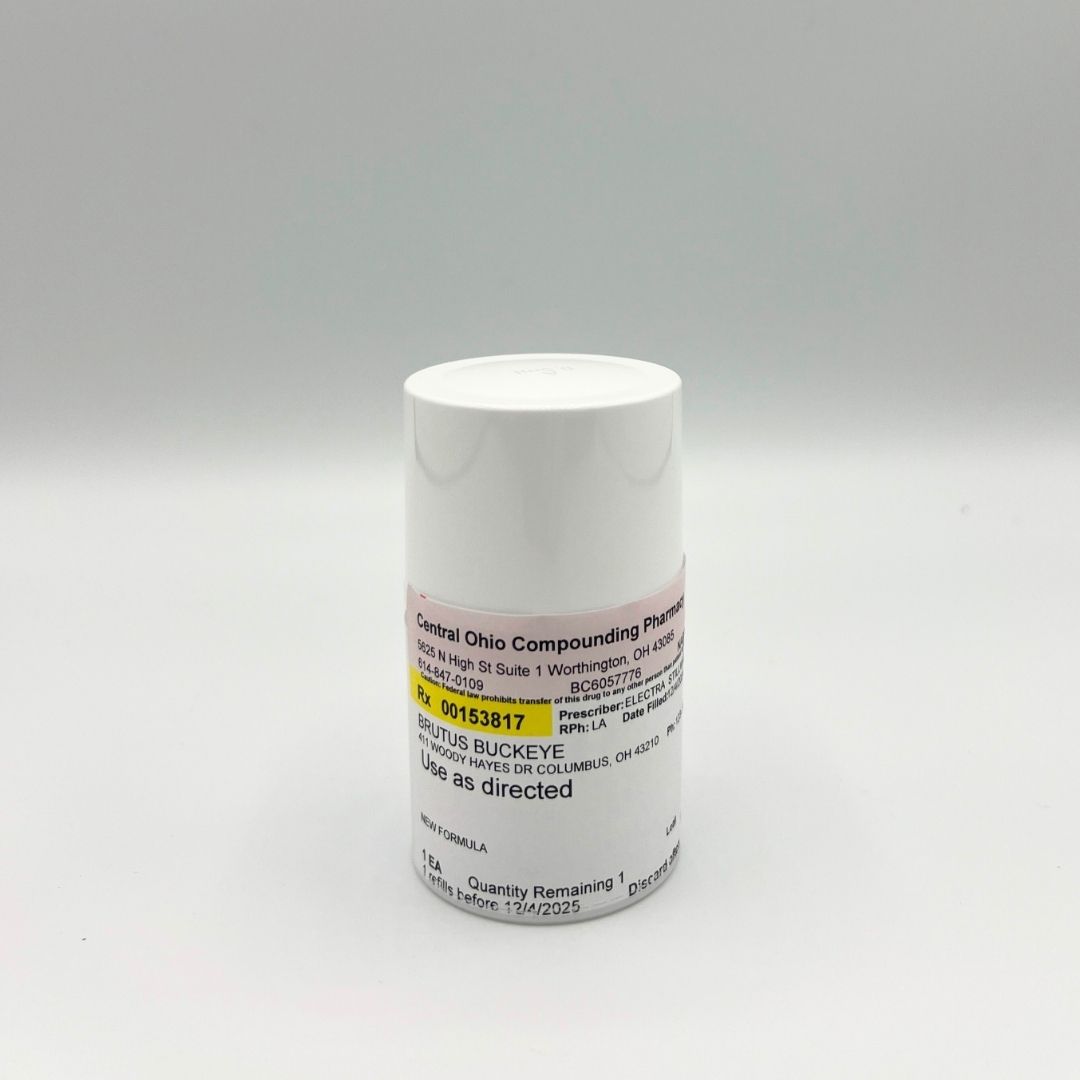
Central Ohio Compounding Pharmacy collaborates with dermatology providers across the state to prepare customized topical dermatologic formulations, including Finasteride / Minoxidil / Hydrocortisone / Retinoic Acid scalp solutions prescribed as part of individualized hair restoration and scalp care plans.
Our pharmacists prepare compounded medications according to prescriber instructions using pharmaceutical-grade ingredients and quality-controlled compounding processes designed to support consistency and safety.
Patients interested in learning more can speak with their prescriber or contact our pharmacy teams in Worthington or the Arena District in Columbus. We work with healthcare providers to prepare compounded dermatology formulations based on individual patient needs.
If you’re a hair loss specialist in Ohio, you can connect with our pharmacists to discuss compounded formulation options that may support your patients’ individualized hair and scalp care plans.
Hair Restoration Journey: What to Expect
Hair growth cycles occur gradually. Because follicles move through active and resting phases, visible changes may take several months of consistent use under clinical supervision.
Your provider may recommend:
- Periodic follow-up visits
- Adjustments to formulation or concentration when appropriate
- Ongoing evaluation of scalp response
Response timelines vary among individuals. Regular monitoring allows your specialist to refine the care plan based on how the scalp and hair follicles respond over time.
Long-Term Hair and Scalp Health Planning
Hair loss management is often an ongoing process rather than a single intervention. A hair loss specialist in Ohio may incorporate:
- Lifestyle considerations
- Nutritional discussions
- Stress management strategies
- Maintenance formulations when appropriate
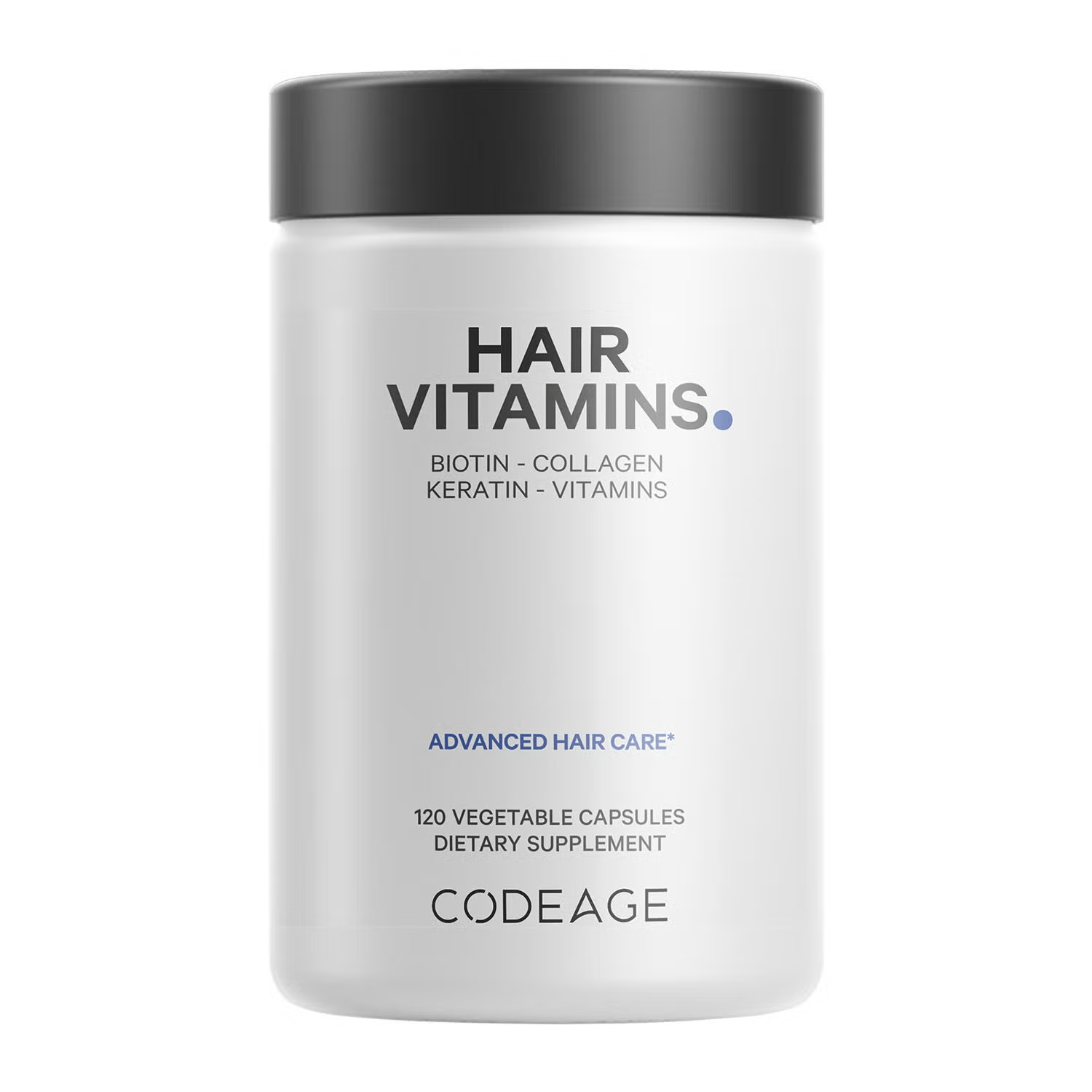
This individualized approach focuses on supporting scalp health and maintaining hair density within the context of a prescriber-directed care plan. Contact our pharmacy to learn more about the nutritional supplements we recommend.
Choosing an Ohio Dermatology Compounding Pharmacy You Can Trust
Selecting an experienced Dermatology Compounding Pharmacy is an important step when exploring personalized approaches to hair and scalp care.
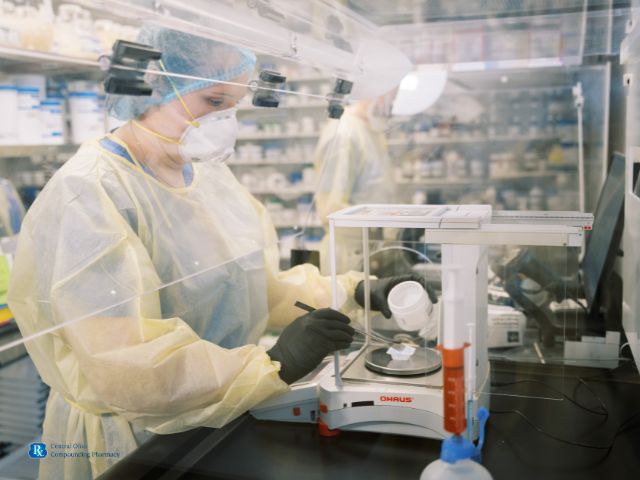
Patients and prescribers may consider several factors when evaluating a pharmacy.
- Accreditation and standards
Central Ohio Compounding Pharmacy follows United States Pharmacopeia (USP) guidelines and maintains quality systems designed to support preparation consistency and safety. - Experience in dermatologic compounding
Our team has decades of experience with skin and scalp formulations and understands the considerations involved in combining ingredients and preparing stable topical bases. - Clear communication
A reliable pharmacy keeps both patients and prescribers informed about ingredient sourcing, preparation timelines, and formulation questions that may arise during the compounding process.
References:
- Bazzano, G. S., Terezakis, N., & Galen, W. (1986). Topical tretinoin for hair growth promotion. Journal of the American Academy of Dermatology, 15(4), 880–893. Link
- Chen, L., Zhang, J., Wang, L., Wang, H., & Chen, B. (2020). The Efficacy and Safety of Finasteride Combined with Topical Minoxidil for Androgenetic Alopecia: A Systematic Review and Meta-analysis. Aesthetic Plastic Surgery, 44(3), 962–970. Link
- Gilhar, A., Etzioni, A., & Paus, R. (2012). Alopecia areata. New England Journal of Medicine, 366(16), 1515-1525. Link
- Gregoire, S., McIntosh, B., Sanchez, K., Biba, U., & Mostaghimi, A. (2025). Local corticosteroids for alopecia areata: a narrative review. Dermatology and Therapy, 15(7), 1607–1631. Link
- Kaufman, K. D., Olsen, E. A., Whiting, D., Savin, R., DeVillez, R., Bergfeld, W., Price, V. H., Van Neste, D., Roberts, J. L., Hordinsky, M., Shapiro, J., Binkowitz, B., & Gormley, G. J. (1998). Finasteride in the treatment of men with androgenetic alopecia. Journal of the American Academy of Dermatology, 39(4), 578–589. Link
- Kedishvili, N. Y. (2016b). Retinoic acid synthesis and degradation. Sub-cellular Biochemistry/Subcellular Biochemistry, 81, 127–161. Link
- Leyden, J., Dunlap, F., Miller, B., Winters, P., Lebwohl, M., Hecker, D., Kraus, S., Baldwin, H., Shalita, A., Draelos, Z., Markou, M., Thiboutot, D., Rapaport, M., Kang, S., Kelly, T., Pariser, D., Webster, G., Hordinsky, M., Rietschel, R., . . . Waldstreicher, J. (1999). Finasteride in the treatment of men with frontal male pattern hair loss. Journal of the American Academy of Dermatology, 40(6), 930–937. Link
- Patel, P., Nessel, T. A., & D, D. K. (2023, February 24). Minoxidil. StatPearls – NCBI Bookshelf. Link
- Professional, C. C. M. (2025b, October 30). DHT (Dihydrotestosterone). Cleveland Clinic. Link
- Sharma, A., Goren, A., Dhurat, R., Agrawal, S., Sinclair, R., Trüeb, R. M., Vañó‐Galván, S., Chen, G., Tan, Y., Kovacevic, M., Situm, M., & McCoy, J. (2019b). Tretinoin enhances minoxidil response in androgenetic alopecia patients by upregulating follicular sulfotransferase enzymes. Dermatologic Therapy, 32(3), e12915. Link
- Suchonwanit, P., Thammarucha, S., & Leerunyakul, K. (2019b). Minoxidil and its use in hair disorders: a review. Drug Design Development and Therapy, Volume 13, 2777–2786. Link
- Sudduth, S. L., & Koronkowski, M. J. (1993). Finasteride: the first 5 alpha-reductase inhibitor. Pharmacotherapy, 13(4), 309–329. Link
- VanBuren, C. A., & Everts, H. B. (2022). Vitamin A in Skin and hair: An update. Nutrients, 14(14), 2952. Link
- Vitamin A. (n.d.). Mayo Clinic. Link